Bradley Hospital
A Standalone Digital Home for the Nation’s Leader in Pediatric Mental Health
Visit Site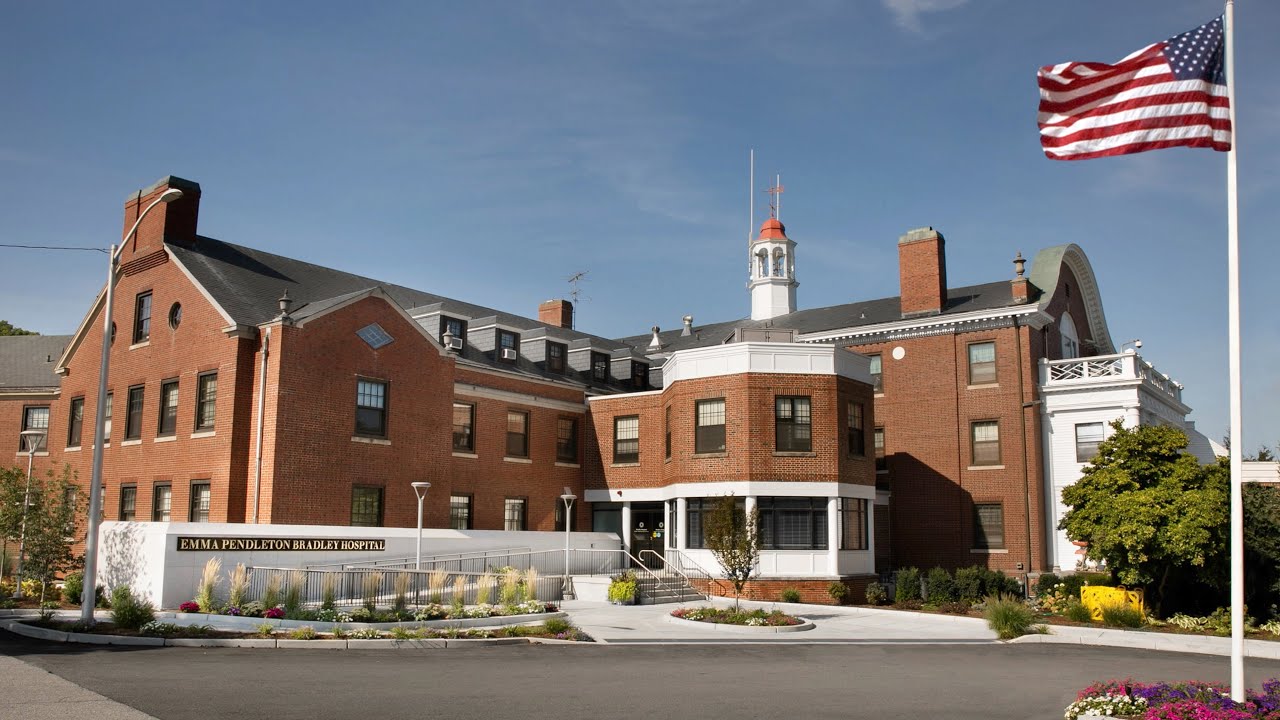
capability
Analytics & Measurement
Design Systems
Drupal
Flexible Page Building
Mobile & Responsive
Technical Architecture
User Research
category
Analytics & SEO
Content Strategy
Design & UI
Research & Strategy
User Experience
industry
Health & Wellness
Healthcare
Bradley Hospital is the nation's first hospital dedicated exclusively to children's mental health, and for years, its digital presence didn't reflect that standing. Oomph built a fully independent website designed around the needs of families in crisis, providers making referrals, and clinicians seeking education, then structured it for search visibility from day one. Within six months of launch, the site attracted more than 95,000 new users, driven primarily by organic discovery, giving Bradley the digital foundation its clinical reputation deserves.
Overview
Bradley Hospital is the nation’s first hospital dedicated exclusively to children’s mental health and behavioral health care, and a teaching hospital for Brown University. Families travel from across the country seeking specialized care. Providers turn to Bradley for clinical expertise, education, and research. The organization’s national reputation is well established.
Previously, Bradley’s website lived inside the broader Brown University Health system site, a shared platform built to serve an entire health system with a wide range of services and audiences. As Bradley’s clinical profile and reach expanded, the opportunity emerged to give the organization its own dedicated digital home: one structured specifically around the people who turn to Bradley, the content they need, and the urgency they often feel when they arrive.
That’s the work Oomph was brought in to do.
The Challenge
Elevating Bradley’s digital presence to match the weight of its clinical reputation meant addressing three interconnected opportunities.
First, consolidating Bradley’s content into a unified, findable home. Some Bradley content lived in its own section of the Brown University Health site, while some was spread throughout the broader system. Key educational resources were either static PDFs or hosted on external platforms with no connection to Bradley’s web presence. Users who found one piece of content had no clear path to related resources. Bringing everything together under a single, purpose-built destination would make that content far more discoverable to those in need.
Second, building a structure around Bradley’s specific audiences. Families searching for care for a child in crisis, providers evaluating referral options, and clinicians seeking professional development have distinct needs and varying levels of urgency. Building a dedicated site allowed us to create an Information Architecture that centered around those three groups: their priorities, their task flows, and the moments when they most need clear answers.
Third, establishing a dedicated search and AEO/GEO presence. A standalone domain with structured, indexable content is the foundation for organic search visibility. It’s also increasingly central to how AI-powered tools and engines surface authoritative health information. Bradley is among the most authoritative institutions in the country on pediatric mental health. A dedicated digital presence would enable that authority to translate directly into discoverability for both traditional search and AI-driven discovery.
The Approach
Oomph partnered with Bradley Hospital leadership, clinicians, and internal stakeholders to understand each audience’s needs before making any structural decisions. Those conversations shaped content priorities, navigation architecture, and the task flows that matter most: finding care, accessing crisis support, making a referral, and registering for a course.
A dedicated platform within a shared infrastructure
The site was built in Drupal using the Domain Access suite of modules. This architecture gave Bradley a fully independent domain and brand while keeping it connected to the Brown University Health ecosystem. Bradley-specific content serves exclusively on BradleyHospital.org. Shared resources adapt dynamically to the appropriate domain and theme. Canonical URL strategies prevent SEO conflicts across the two properties. Bradley’s team gained full control of their digital presence without duplicating the operational overhead of maintaining a separate platform.
Three new content types that replaced fragmentation
One of the most significant structural decisions was building purpose-built content types for Conditions, Courses, and Podcasts, formats designed specifically for how Bradley’s audiences search for and engage with information. A long-standing mental health education publication that had existed only as a PDF became structured, accessible web pages. Courses previously hosted on external platforms moved directly into the site, improving visibility, searchability, and registration flow. Podcasts became indexable content connected to related topics and programs. Taxonomy-driven connections across all three types help users navigate related content naturally, rather than hitting a dead end.
Navigation built for action
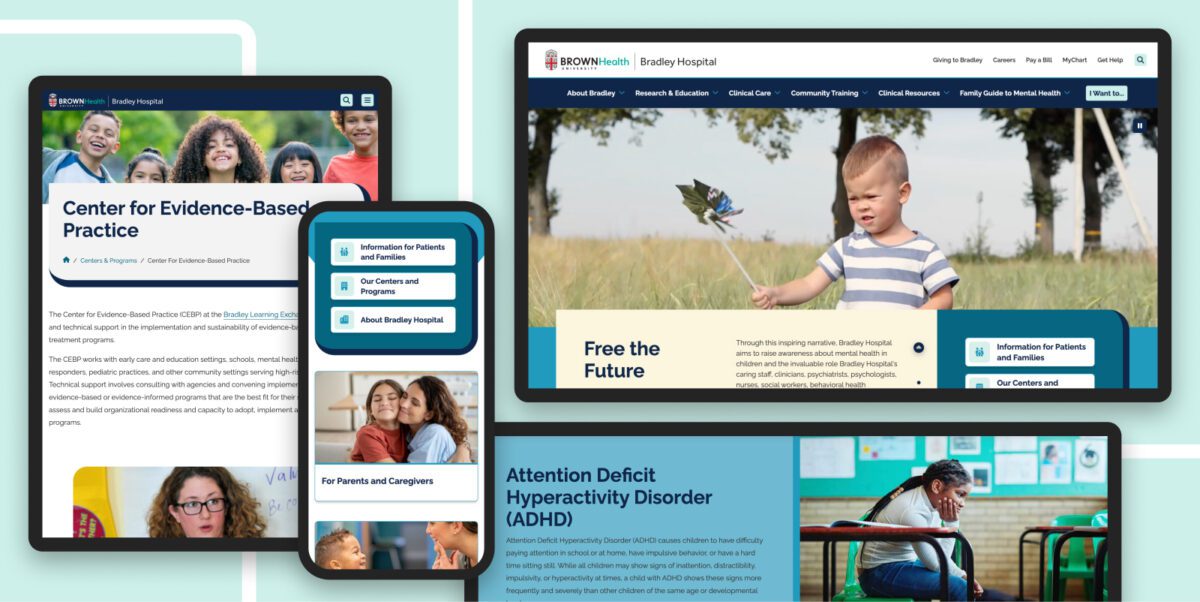
A custom “I Want To” quick-action menu surfaces the highest-priority tasks across all user types: finding care, accessing crisis support, exploring programs, and making a referral. Families in stressful moments can reach critical information within one or two clicks. Key conversion pathways, including crisis help, philanthropic giving, career exploration, and educational resources, were elevated in the global navigation to reduce friction wherever a user enters the site.
Design that earns trust without creating distance
Bradley’s visual identity needed to feel distinct from Brown University Health while remaining credible within that system. The design extends the Brown Health palette, then refines it: rounded shapes, thick borders, muted tones, and soft animations that create a sense of warmth and approachability without sacrificing authority. As one key stakeholder described it, the site “speaks ‘professional’ while also having a little lighter touch to it.” Accessibility and mobile responsiveness were integrated throughout, with WCAG best practices and screen reader compatibility front of mind throughout the design process rather than as afterthoughts.
What This Made Possible
Since launching in November 2025, BradleyHospital.org has attracted more than 95,000 new users, with nearly 89,000 sessions driven by organic search, the direct result of the dedicated domain and SEO-structured content. The site’s dedicated domain also helps ensure that Bradley content is correctly attributed and surfaced by AI-powered search tools and generative engines. Clear brand identity, structured content, and a standalone domain are exactly the signals those systems use to identify authoritative sources. For a site that previously had no independent search presence, that volume of organic discovery represents a fundamental shift in how families and providers find Bradley online.
Nearly half of all visitors arrive on mobile (48.1%), which validates both the design investment and a harder truth: families searching for pediatric mental health resources aren’t always doing so from a desk. They’re doing it from a parking lot, a waiting room, or a kitchen table at night. The mobile experience was built for that reality.
Key program and condition pages are generating engagement time that indicates genuine research, not quick bounces. Pages covering intensive OCD and anxiety programs, outpatient services, and levels of care are averaging 50 to 83 seconds of engagement time, a range consistent with focused, task-oriented research behavior. Users spend real time with the content that matters to them before taking action, rather than scanning and bouncing. The Courses page averages 65 seconds.
The returning user base of 13,000 is meaningful in context. Families researching care for a child often return to a site multiple times before taking action. That return behavior signals that the site is functioning as a trusted resource, not just a one-time destination.
Bradley’s team can now manage, update, and promote their content independently, without navigating the constraints of a shared health system platform. The structured content model makes it faster to add new conditions, publish new courses, and surface new resources without relying on outside support for routine updates.
The result
BradleyHospital.org is a purpose-built digital system that reflects the organization’s national authority in pediatric mental health while meeting the practical, urgent needs of the families and providers it serves. The independent domain, structured content architecture, and accessible design give Bradley both the visibility and the operational foundation to grow its digital presence on its own terms.
The site launched in November 2025 with a user testing initiative now underway to inform the next phase of optimization, an approach that reflects Bradley’s commitment to continuous improvement rather than a one-time launch. Design refinements and accessibility enhancements are being worked into the roadmap as the organization gathers real-world feedback from the community it serves.
Why This Matters
Healthcare organizations known for clinical excellence often find it difficult to showcase their unique strengths when operating within the digital ecosystem of a larger health system. The gap creates real costs: families can’t find care, providers can’t make informed referrals, and educational resources reach a fraction of the audience they should. Closing that gap requires more than a redesign. It requires a system that’s structured to perform, built to be maintained, and designed around the people who need it most.