CarGurus
From Digital Fragmentation to Dealer Engagement Infrastructure
Visit Site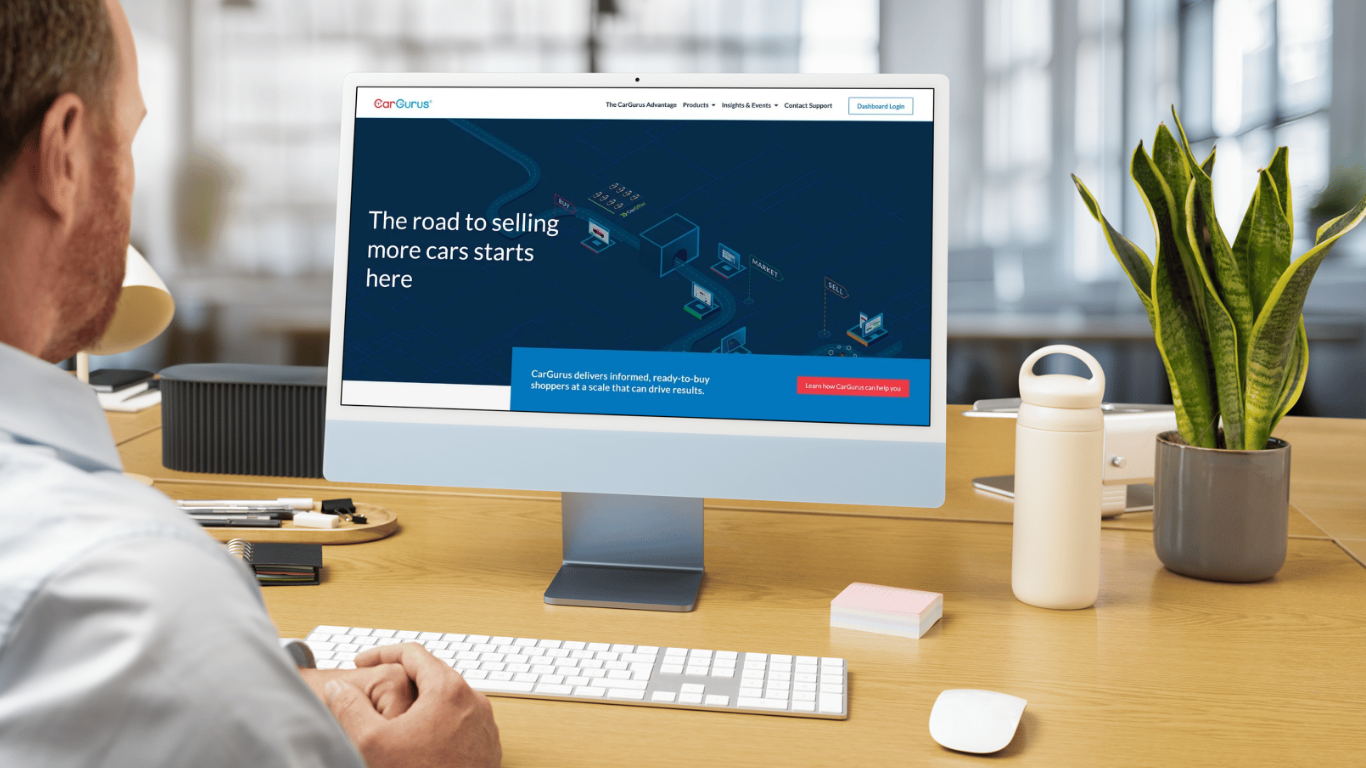
category
Accessibility
Analytics & SEO
Content Strategy
Technology
User Experience
capability
Analytics & Measurement
Flexible Page Building
Migration
Technical Architecture
User Research
industry
Other
CarGurus' dealer-facing web presence had fractured into a collection of disconnected sites, each managed separately, tracked separately, and experienced separately by the dealers their business depends on. Bounce rates above 61%, visitors averaging fewer than 10 seconds on site, and a marketing team that couldn't publish without engineering support: the infrastructure wasn't just inefficient. It was costing dealer engagement. Oomph consolidated it into a single governed content portal built on Contentful, giving CarGurus the system it needed to measure what mattered, move faster, and build dealer trust at scale.
The Business Context
CarGurus operates one of the largest online automotive marketplaces in the U.S. Its revenue model depends on dealer subscriptions. Dealers pay for access to shopper data, market intelligence, product tools, and business support. When that relationship is mediated by digital, the quality of the digital experience is not a design question. It is a retention question.
By 2019, the infrastructure supporting that relationship had become a strategic liability.
The Problem: Digital Debt at Scale
CarGurus’ dealer-facing web presence had grown organically into a collection of disconnected properties: multiple WordPress sites, a gated resource center, a product microsite, and a dealer dashboard. Each operated independently, with different workflows, separate analytics, and no shared content standards.
The consequences were structural, not merely cosmetic.
For internal teams: The B2B marketing team could not publish or update content without engineering support. Campaign velocity, product launches, and content strategy were bottlenecked by a dependency that had nothing to do with marketing capability. Without centralized reporting, leadership had no way to understand what was working or where dealers were dropping off.
For dealers: Research and interviews surfaced a consistent pattern. There was no obvious place to log in, product information and help content scattered across destinations, and shopper data siloed away from the resources that gave it context. The experience communicated the opposite of CarGurus’ intent. Dealers found fragmentation where they expected authority. Pre-consolidation data made the cost of that fragmentation concrete. The Dealer Resource Center carried a bounce rate of 61.57%, the Insights pages topped 80%, and the bulk of visitors spent fewer than 10 seconds on the site. Nearly 15% of dealers reported struggling to find information, with the disjointed experience cited as the primary reason.
For compliance: Accessibility gaps across the WordPress properties introduced regulatory risk and excluded users relying on assistive technology, a segment of the dealer population that was simply invisible.
The problem was not any single site. It was the absence of a system.
The Diagnosis
Most agencies, presented with this problem, would have proposed a website redesign. Oomph diagnosed something different. CarGurus did not have a website problem, they had an operating model problem that manifested through websites.
The fragmentation was a symptom of three root causes:
- No content governance model. Without shared standards, each property developed its own editorial process, its own taxonomy, its own way of doing things. Content proliferated without coherence.
- No editorial independence. The marketing team’s dependency on engineering for routine publishing created a structural bottleneck that compounded over time. Every campaign, every update, every product launch queued behind engineering capacity.
- No shared measurement. Without centralized analytics, CarGurus could not connect dealer behavior across properties, could not identify friction points in the engagement journey, and could not make evidence-based decisions about where to invest.
Fixing any one of these without the others would have reproduced the same problem on a new platform.
The Solution: A Dealer Engagement System
Oomph began with structured discovery across sales, support, UX, and marketing using stakeholder interviews, a full content audit, heatmap analysis, and a card sort exercise to understand how dealers actually navigate and categorize content. The critical finding was that dealers organized information around their workflows and tasks, not around CarGurus’ internal team structures. The existing architecture reflected the org chart. The new one needed to reflect the dealer. Dealer research also surfaced where content investment would matter most. 38.78% of dealers were very interested in digital marketing best practices, and 36.12% in automotive marketing best practices, two content categories that had been scattered or buried across the fragmented properties.
From that research, Oomph designed and built three interconnected capabilities.
A Unified Content Platform
Three separate sites, the Dealer Resource Center, the Dealer Account Request page, and the product microsite at products.cargurus.com, were consolidated into a single governed destination. The Contentful-based content portal consolidated Articles, Events, Products, Authors, and reusable Design Components into a single governed destination, with localization for the Canadian market. The content model was documented and governed, giving the marketing team full editorial control without engineering dependency.
Centralized Measurement
One destination meant one analytics framework. For the first time, CarGurus could track dealer engagement across the entire content ecosystem, not property by property, but as a coherent journey. Internal teams could direct every channel to the same URL, building familiarity and reinforcing the hub over time.
Systematic Accessibility Remediation
Accessibility work ran in two phases, starting with the existing WordPress properties (addressing contrast failures, empty labels, and keyboard navigation gaps), then post-launch across three Contentful-based sites targeting WCAG 2.1 compliance. Remediations included fixing keyboard navigation and adding tab focus rings across dropdown menus, correcting color contrast ratios to meet the WCAG 4.5:1 standard in headers, forms, and FAQ blocks, adding alt text to logos and informational icons, and converting static chart images into accessible HTML formats. This was not a one-time fix but a repeatable compliance process designed to scale with the platform.
What Changed
Operational velocity: The marketing team gained the ability to publish, update, and govern content independently, removing the bottleneck that had constrained their ability to execute for years.
Dealer experience: Three sites became one. Dealers gained a single, consistent destination for products, services, research, and account access. The experience shifted from fragmented and frustrating to coherent and navigable. Where pre-consolidation data showed bounce rates above 61% and the majority of visitors spending fewer than 10 seconds on site, the unified hub gave CarGurus the structural foundation to actually retain and re-engage that audience.
Strategic visibility: Centralized analytics replaced fragmented multi-site tracking, creating a shared foundation for understanding dealer behavior and making evidence-based decisions about content investment, product positioning, and engagement optimization.
Market reach: Accessibility remediation across five properties extended the platform to dealers using assistive technology, a population that had been excluded by the previous architecture.
The Strategic Takeaway
Complex B2B organizations accumulate digital debt one property at a time. By the time the cost becomes visible, it has already slowed marketing, obscured what matters, and turned internal fragmentation into a customer-facing problem.
CarGurus’ situation is common. What made the engagement different was the diagnosis. The dealer experience needed to be treated as an integrated system rather than a collection of sites to be redesigned. The distinction matters. A site redesign solves today’s problem. A system creates the infrastructure to solve tomorrow’s.
Oomph delivered the architecture, governance model, and editorial capability for CarGurus to keep improving dealer engagement over time, not as a one-time project, but as an ongoing organizational capability.
Ready to turn your digital fragmentation into a system? Let’s talk about what’s possible for your organization.