Catch Carbon
From Experiment to Infrastructure: Building the Platform Behind Catch Carbon
Visit Site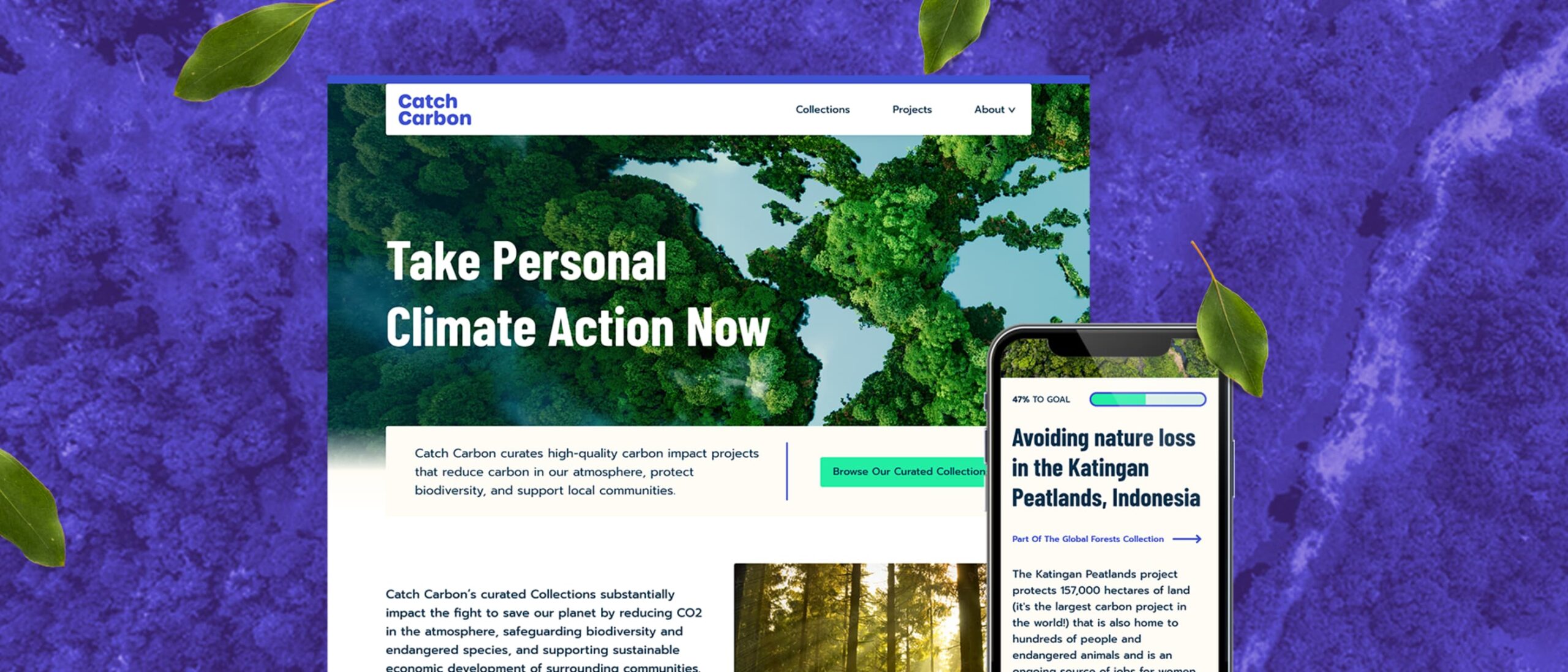
capability
APIs
Design Systems
Flexible Page Building
Mobile & Responsive
Technical Architecture
User Research
category
Content Strategy
Design & UI
Digital Engineering
Research & Strategy
User Experience
industry
Environmental & Non-profits
The voluntary carbon market had a visibility problem, and there was no clear digital playbook to solve it. When Rare set out to build Catch Carbon, a marketplace where everyday people could fund climate-friendly projects, they needed a partner who could move fast, design for trust, and build infrastructure to grow. Oomph delivered both: first launching a bold v1.0 experiment in under three months, then rebuilding the platform on a modern headless architecture to support ongoing testing and scale.
Overview
Catch Carbon is powered by Rare, a global conservation organization with 40 years of experience driving behavior change across 60 countries. Their mission depends on mobilizing individuals and communities to take actions that benefit both people and the planet.
To expand the voluntary carbon credit market, Rare needed a digital platform that could explain carbon offsets clearly, build trust with everyday users, and convert awareness into action. Nothing quite like it existed. Oomph partnered with Rare across two phases: first to bring the concept to market quickly, then to build the infrastructure to sustain and scale it.
The Challenge
The voluntary carbon market had a visibility problem. Carbon offsets represent a powerful tool for individual climate action, but public awareness remained low. Most people didn’t understand what carbon offsets were, why they mattered, or how to purchase them confidently.
Rare needed more than a website. They needed a digital experience system that could:
- Educate and convert users unfamiliar with carbon markets
- Publish and iterate content quickly as they tested messaging and engagement strategies
- Scale efficiently without recurring platform constraints or cost bloat
- Maintain design and message consistency across all content and user journeys
And they needed it fast, with the flexibility to learn and adjust as real user behavior emerged.

The Approach
Phase 1: Design and Launch
Oomph led discovery, experience design, and development for Catch Carbon’s initial launch, bringing the platform to market in under three months.
We started with a cohort analysis of more than 20 platforms, from other emerging carbon marketplaces to crowdfunding sites like Kickstarter and Kiva, to understand the landscape and identify what was missing. The research confirmed there were no established best practices; Catch Carbon would need to set its own.
From there, we focused on connection and credibility. User journey mapping helped us anticipate visitor mindsets at every stage: curious on arrival, inspired while browsing, confident at checkout. Our approach included synthesizing project data to showcase aggregate impact, simplifying navigation, standardizing project descriptions, and introducing “Collections” that bundled multiple projects to help users maximize their contribution.
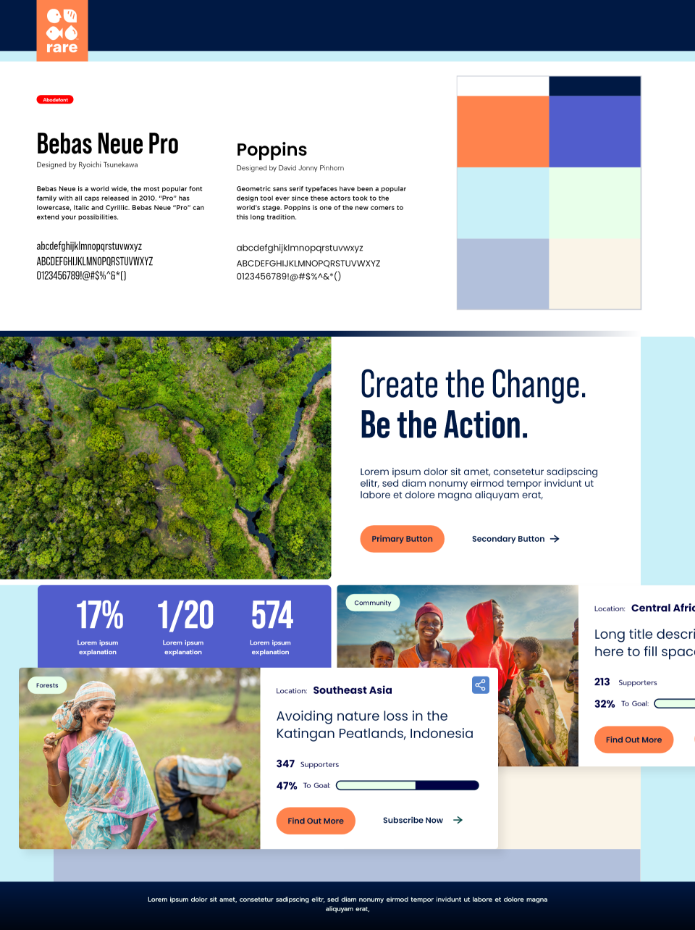
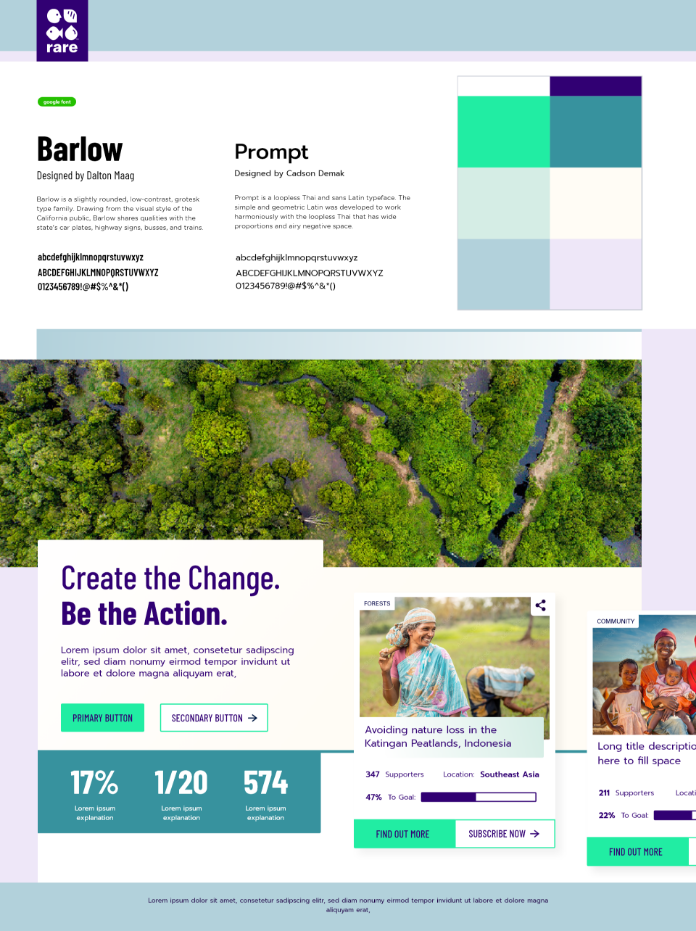
We led Rare through a design language workshop, used style tiles to align on aesthetics quickly, and refined full page designs in real time as we tested the internal API. Seven weeks after kickoff, Catch Carbon launched publicly.
Phase 2: Platform Rebuild
With the concept validated, Rare needed infrastructure to match their ambitions. Oomph designed and built a modern, flexible platform, leading both design and engineering.
We recommended Contentful as the content foundation and React for the front-end experience. This headless architecture separated content management from presentation, giving Rare’s team the ability to update messaging, launch campaign pages, and refine user flows without developer dependencies.
We built a modular design system that balanced clarity, trust, and accessibility across every component, from educational explainers to conversion flows. On the engineering side, we extended Rare’s existing API to support the new platform, working alongside their internal team to ensure seamless data flow and operational continuity.
Throughout, we treated the platform as a system to operate, not a project to complete.
What This Made Possible
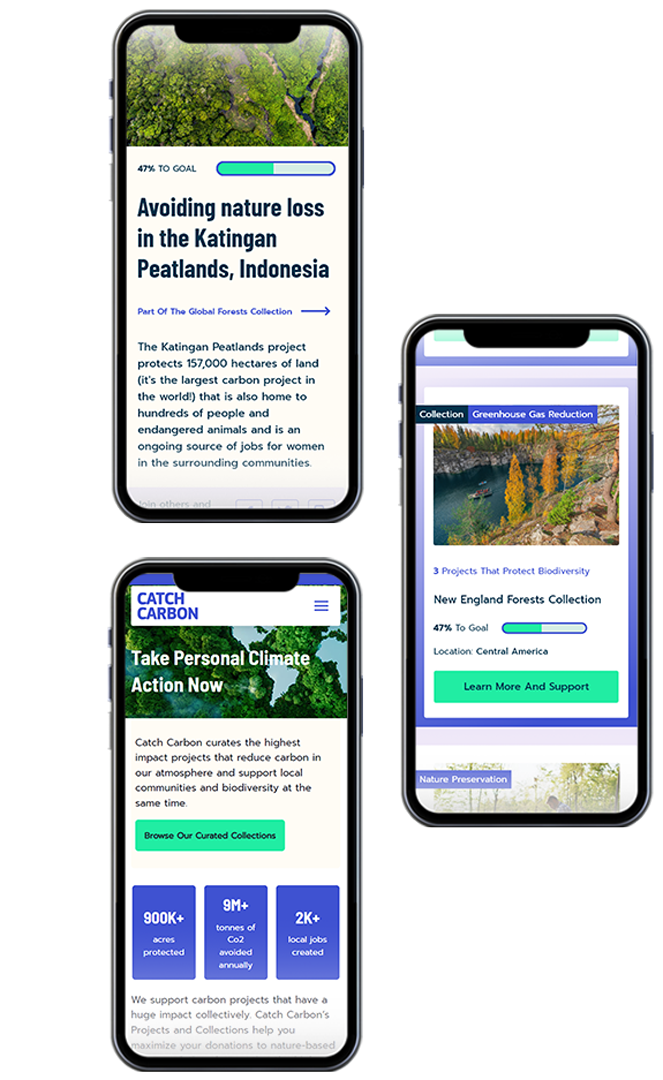
Two things made this work: Oomph’s ability to balance speed with rigor, and our commitment to operating as a true partner with Rare. In Phase 1, we moved from vision to launch in weeks without sacrificing design quality. In Phase 2, we built on what had been learned rather than starting over, preserving continuity for users while dramatically improving the underlying infrastructure.
Oomph is personally invested in the kind of environmental work Rare does, which made this collaboration something more than a project.
The Result
Catch Carbon launched v1.0 to the public in seven weeks, marking a milestone for the voluntary carbon credit market and democratizing access for everyday consumers. The platform has since been rebuilt on a modern headless architecture that gives Rare the operational flexibility to test, iterate, and scale on their own terms, supported by a design system that maintains quality and consistency as the audience grows.

Why This Matters
Most organizations in the climate and nonprofit space face the same trade-off: build something fast and limited, or invest in systems that take too long and cost too much. Catch Carbon is proof that speed and sustainability aren’t mutually exclusive. They just require the right partner and the right approach.
By treating digital infrastructure as a system to operate rather than a project to deliver, Rare gained the foundation to test, learn, and scale. And by staying in the partnership across both phases, Oomph helped ensure that what was built in Phase 1 wasn’t discarded. It was built on.
It’s nice to have a partnership [with Oomph] where you guys are so honest, straightforward, hardworking, and thoughtful.
— Catch Carbon