
Overview
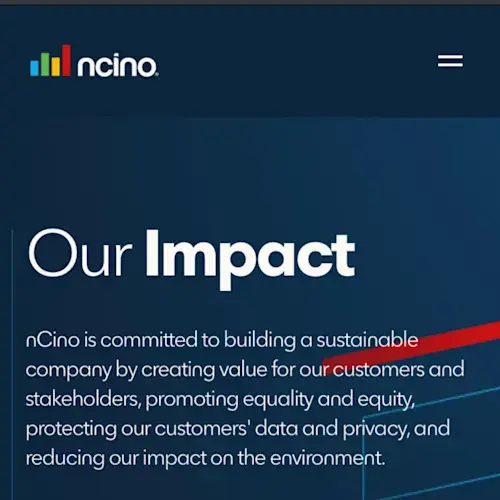
nCino, Inc. is a leader in intelligent banking solutions and a pioneer in the financial technology space. As their business continues to grow and their digital strategy evolves, they needed to ensure their content management capabilities could keep pace with their expanding marketing needs.
Our collaboration with nCino focuses on optimizing their use of the Contentful platform to enhance their internal marketing and website capabilities. By leveraging Contentful, we’re helping nCino streamline and improve their content management processes, allowing their teams to focus more on innovation and growth within their core business.
The approach
We’re working alongside nCino to optimize their Contentful platform implementation. The goal is ensuring their digital presence continues to align with their evolving strategy and marketing needs while supporting their ongoing success as pioneers in the financial technology space.
By enhancing their content management processes, we’re empowering nCino’s internal teams to work more efficiently and strategically.
Why this project matters
This work represents an important step in ensuring nCino’s digital presence continues to align with their evolving strategy and marketing needs. The optimization supports their ongoing success as pioneers in the financial technology space by removing operational friction and enabling their teams to focus on what matters most — innovation and growth.
Overview
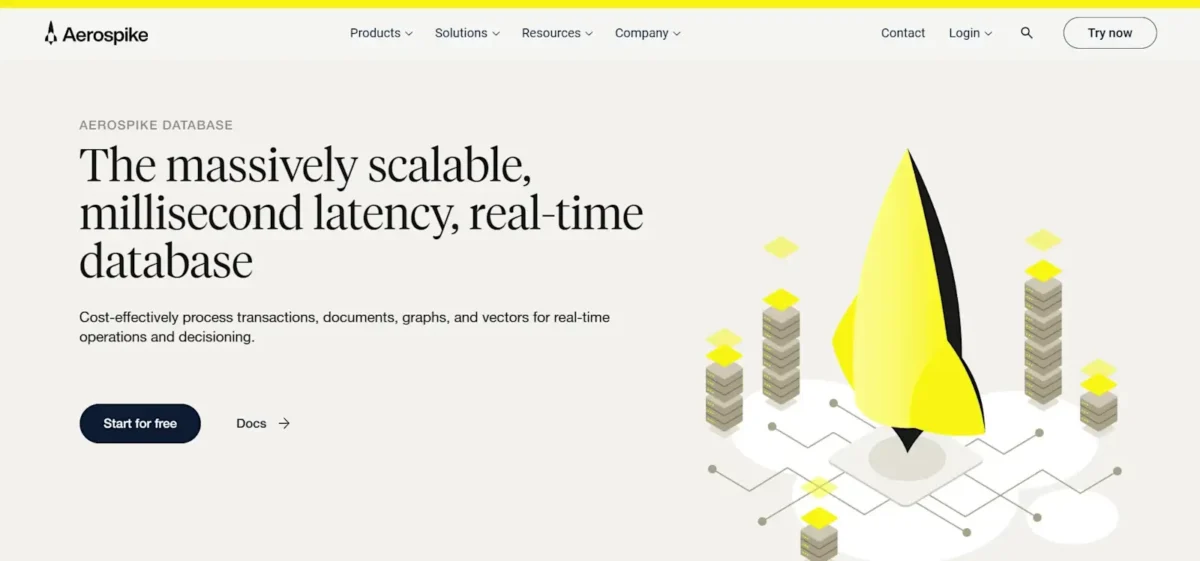
Aerospike specializes in high-performance NoSQL databases known for their speed, scalability, and reliability in handling large volumes of data in real-time applications. Their database technology is designed to meet the demands of modern data-intensive applications.
The company’s platform offers features such as strong consistency, high availability, and automatic failover to ensure continuous operations even in the event of hardware failures or network issues. Aerospike also provides tools and integrations to support analytics, monitoring, and management of the database environment, empowering developers and operations teams to optimize performance and scalability.
Think of a NoSQL database as a big, organized digital filing cabinet for storing different kinds of information. Traditional databases are like organized spreadsheets where everything is neatly arranged in rows and columns. However, NoSQL databases are designed to handle different types of data—like text, numbers, pictures, and more—and can store huge amounts of it very quickly. They’re a super-fast and flexible digital storage system.
The challenge
Aerospike needed a new platform to provide consistent, clean rebranding, increases in speed and efficiency, an enhanced user and client experience, and streamlined communication with clients.
Despite their renown in the NoSQL database market, their website lacked the clarity needed to capture conversion rates fitting for a brand in the spotlight of their digital industry.
The approach
Headless CMS functions similarly to NoSQL databases, allowing content managers to view and manage content of all forms easily and from one place. Under the guidance of our team, Aerospike decided that a migration to a headless CMS with Contentful was the right option.
This decision, along with brand redesign and consistent messaging, were all instrumental parts of Aerospike’s digital revolution. We were able to work side by side with Aerospike to give them a refresh that tells a story.

The Results
The result is a totally remastered headless CMS website, providing Aerospike the foundation needed for continued success and reputability. The new platform delivers the consistent, clean rebranding they needed along with the speed, efficiency, and enhanced user experience that positions them for growth.
We were able to work side by side with Aerospike to give them a refresh that tells a story and matches the innovative spirit of their cutting-edge database technology.
Throughout the process, I was impressed by the ways Aerospike would experiment with its database. That fits how [Oomph] approaches our projects: open-minded and ready to break the mold.
— Jesse Day, Technical Director
Overview
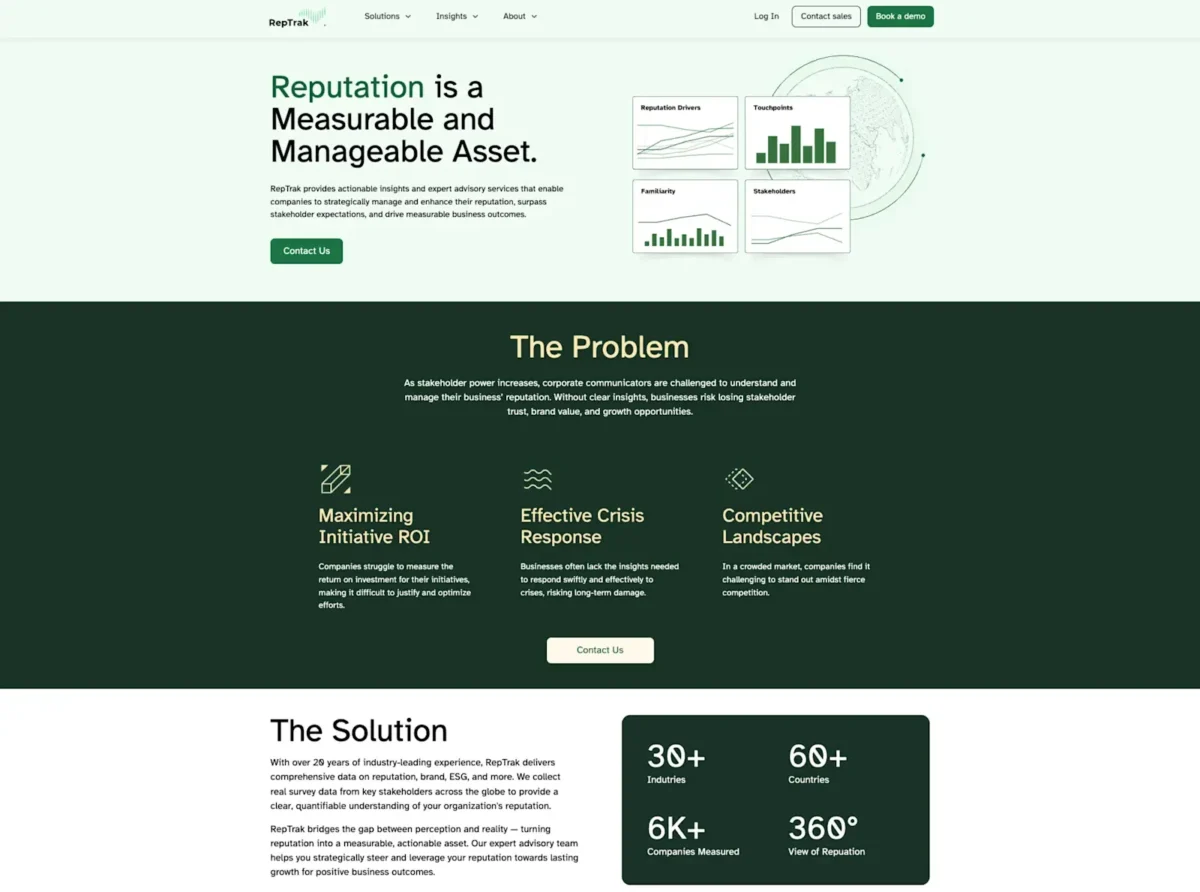
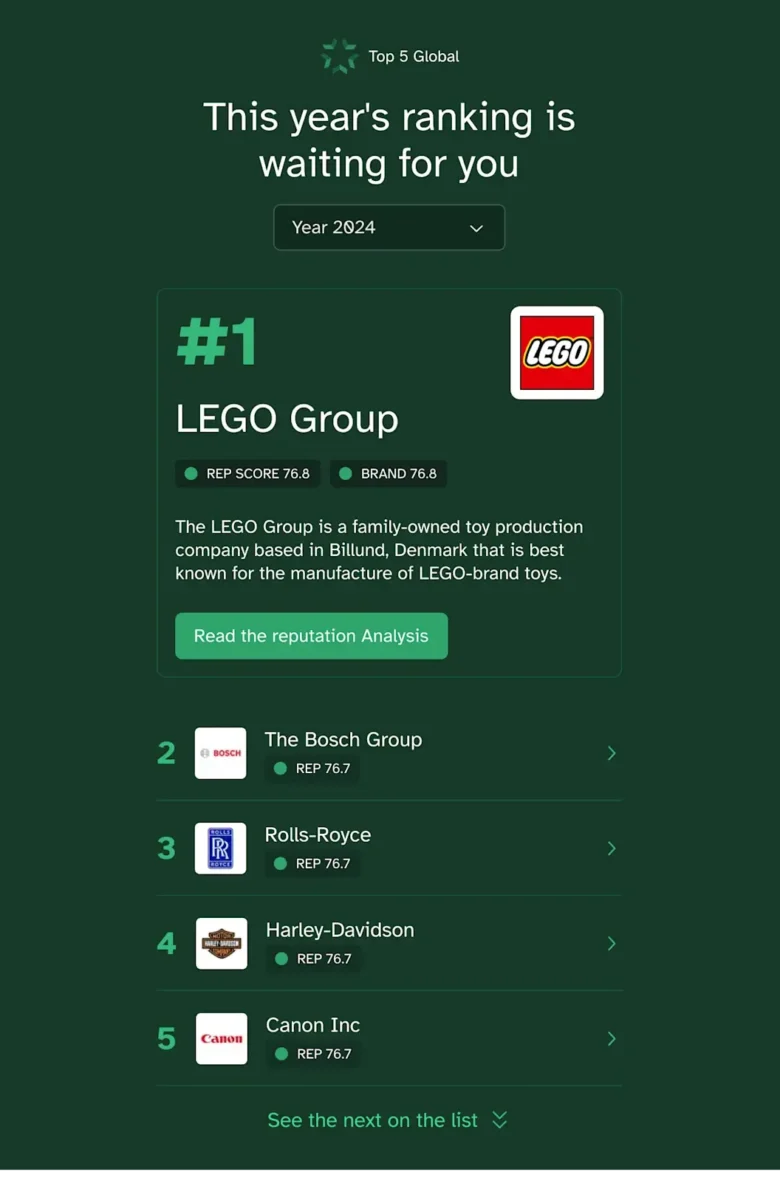
For over twenty years, RepTrak has been the go-to provider for reputation data and insights, helping organizations understand and improve their corporate reputation. With their flagship Global RepTrak 100 report, RepTrak offers an annual definitive ranking of corporate reputation for the world’s leading companies, providing valuable benchmarks that influence strategic decisions and stakeholder relationships.
The RepTrak Platform draws on the world’s largest reputation database with over 20 years of data. Their reputation scores serve as a leading indicator, allowing teams to interpret constantly updating streams of reputation, brand, ESG, and media data.
RepTrak’s Home and Global RepTrak 100 Landing Page are their most important lead generators, making it imperative to get these digital experiences right.
Key results
Increase in report downloads
YoY conversion boost
The Challenge
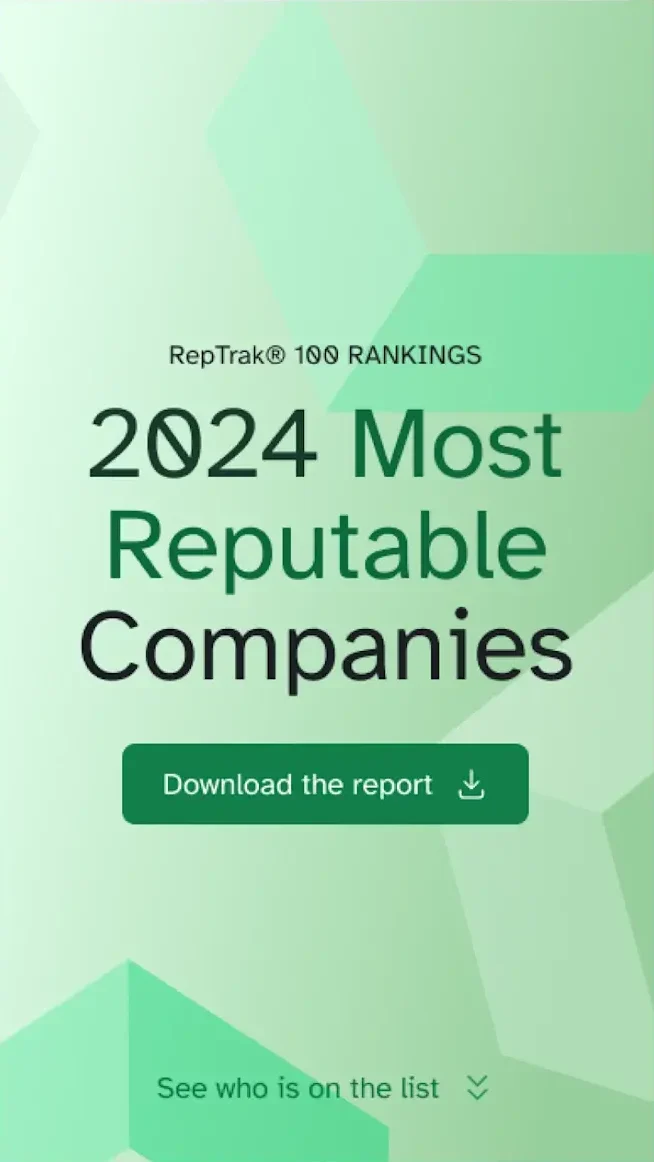
The Global RepTrak 100 report is more than just data — it’s a definitive ranking system recognized industry-wide that reinforces RepTrak’s leadership in the reputation industry. Their homepage demands similar attention as the first or second touchpoint for leads.
The challenge was to design landing pages that not only met the aesthetic and functional needs of their users but also reinforced RepTrak’s brand as a trusted and authoritative source. With the report being their top lead generator for the year, the landing page needed to be engaging, fast-loading, and seamlessly integrated into their Contentful site.
Beyond aesthetics for outside visitors, their internal team required Contentful modeling conducive to empowering Content Managers, guidance on technical integrations, and a new design system.
The Approach
Redefining Technical Support
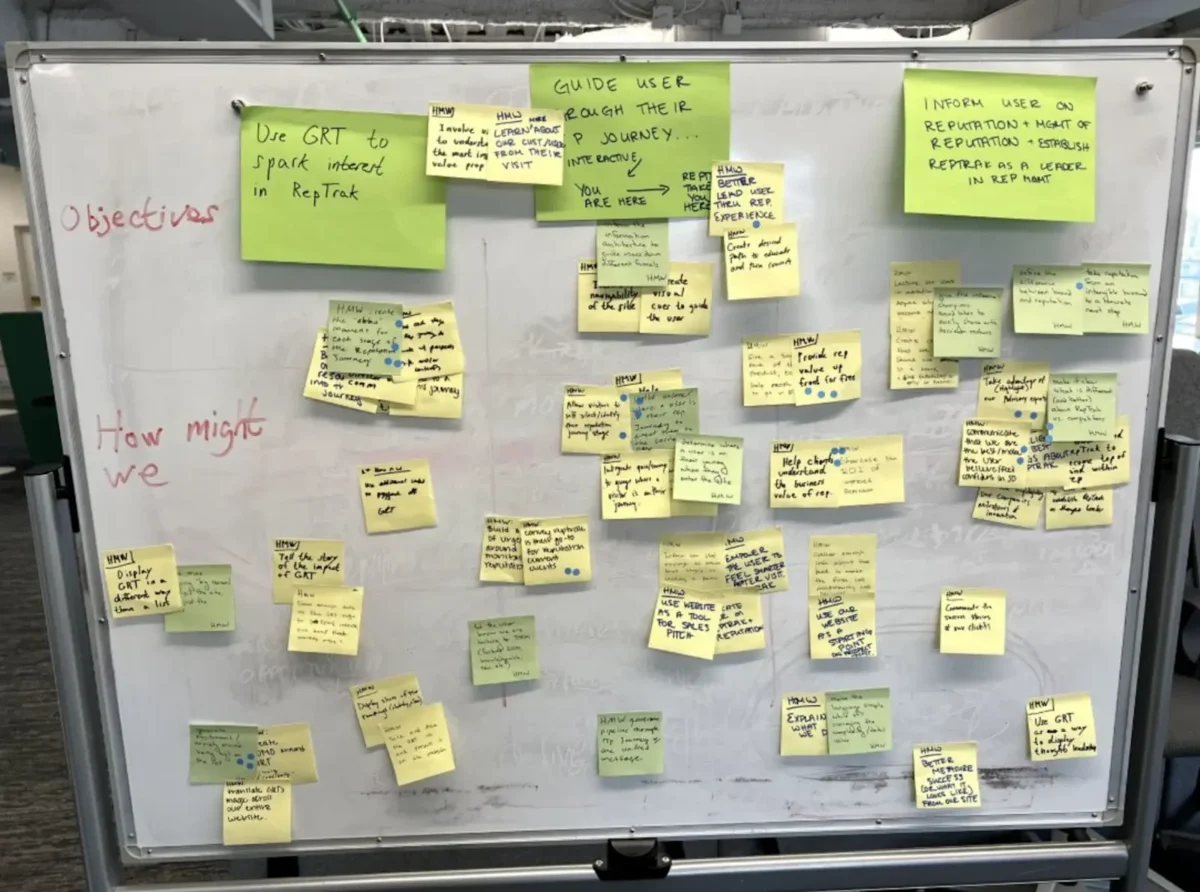
With any project, proper guidance is an often overlooked prerequisite. It’s fairly common to “know what you want” and have no idea how to get there. It’s even more common to “know what you want” and for that journey to achieve the “want” be ill-advised. Without the outside perspective of a technical solutions partner, internal biases and inefficiencies multiply.
We approached this project interdisciplinary and agile. Assuming the role of impartial confidant, we were able to give the RepTrak team objective recommendations, allowing us to focus on speed with a collaborative touch.
Collaborative and Strategic Design
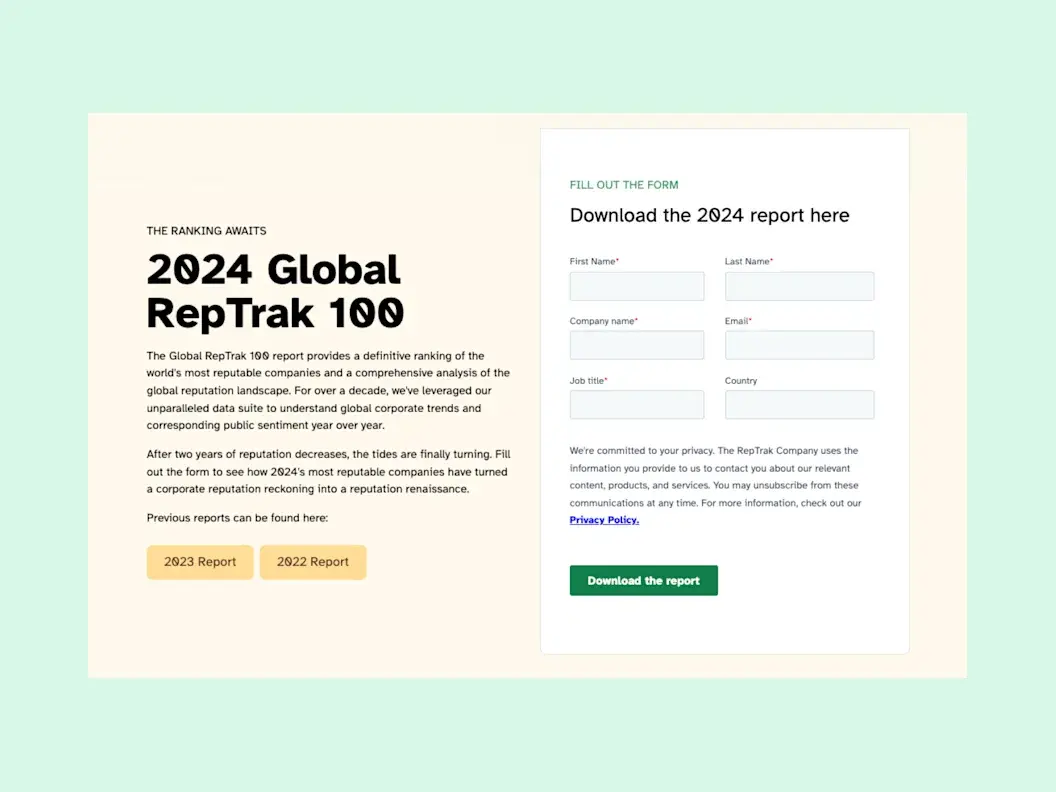
The Home and Global RepTrak 100 landing page received a complete overhaul, designed to elevate user experience, increase engagement, and drive conversions. Not to mention, make content editing and management easier for all parties internally.
The redesigned landing page is a testament to our collaborative efforts with RepTrak, merging aesthetics with functionality. By focusing on user experience and leveraging Contentful’s robust capabilities, we created a page that not only highlights the significance of the Global RepTrak 100 report but also aligns with RepTrak’s brand values and business goals.
The design features intuitive navigation, clear calls to action, and visually appealing elements that draw attention to key insights from the report. We also incorporated responsive design principles to ensure the page performs well across devices, catering to a global audience.
The Results
The redesign delivered measurable impact on RepTrak’s most important lead generation channels. Report downloads increased by 6% and conversions saw an impressive 40% year-over-year boost.
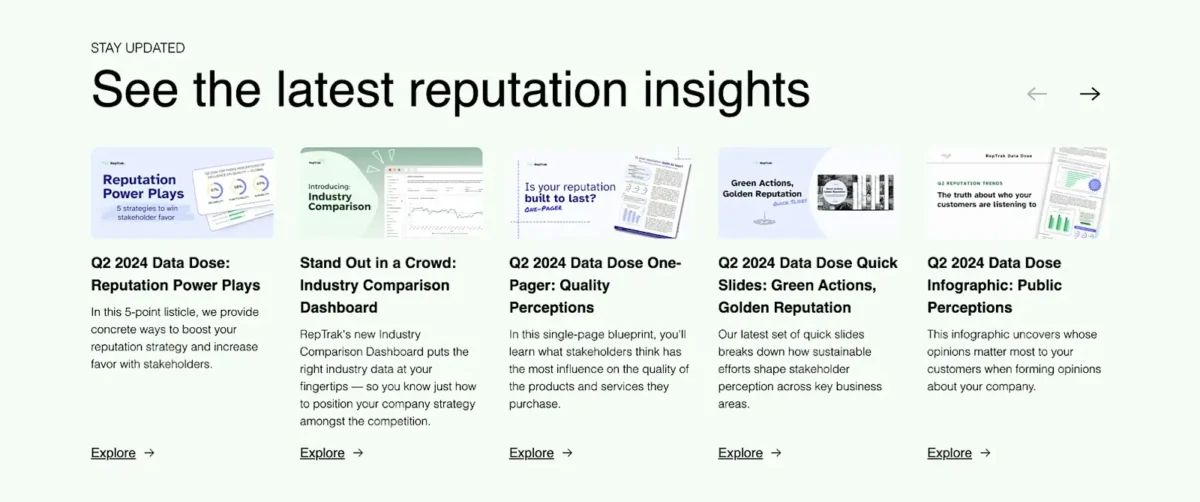
The new landing page is not just a one-time update — it’s a strategic investment in RepTrak’s digital presence. By ensuring a seamless and engaging experience, we’ve laid the groundwork for future enhancements that will extend to other areas of their Contentful site.
[Oomph] truly understood how important this report was to the company and helped us build something that can be translated across our website — so every piece we release can be just as powerful.
— Bianca Martucci-FiNk, Director of Global Content Marketing, The RepTrak Company
Overview
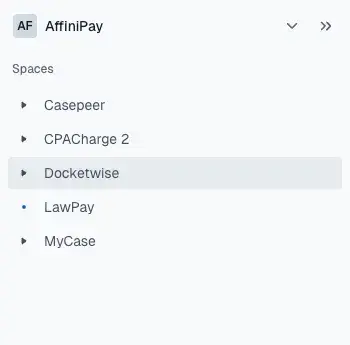
8am is the professional business platform purpose-built to help lawyers, accountants, and other experts deliver world-class outcomes for their clients and their firms. The company manages five distinct brands: MyCase (legal practice management), LawPay (legal payments and financial management), CasePeer (personal injury practice management), DocketWise (immigration practice management), and CPACharge (accounting payments and billing). Trusted by over 260,000 professionals and approved by 175+ bar and professional associations, 8am has spent 20+ years helping professionals make time for what matters.
As 8am prepared for a major rebrand to unify operations across all brands, they faced a complex technical challenge: multiple legacy CMS platforms including WordPress, HubSpot, and custom page builders created inconsistent publishing workflows, heavy plugin dependencies, and thousands of scattered media assets across their portfolio.
Stats/Key Outcomes
- 5 brands → 1 architecture: MyCase, LawPay, CasePeer, Docketwise, and CPACharge now managed in one scalable platform.
- Faster publishing cycles: Marketing teams can launch campaigns in hours, not days.
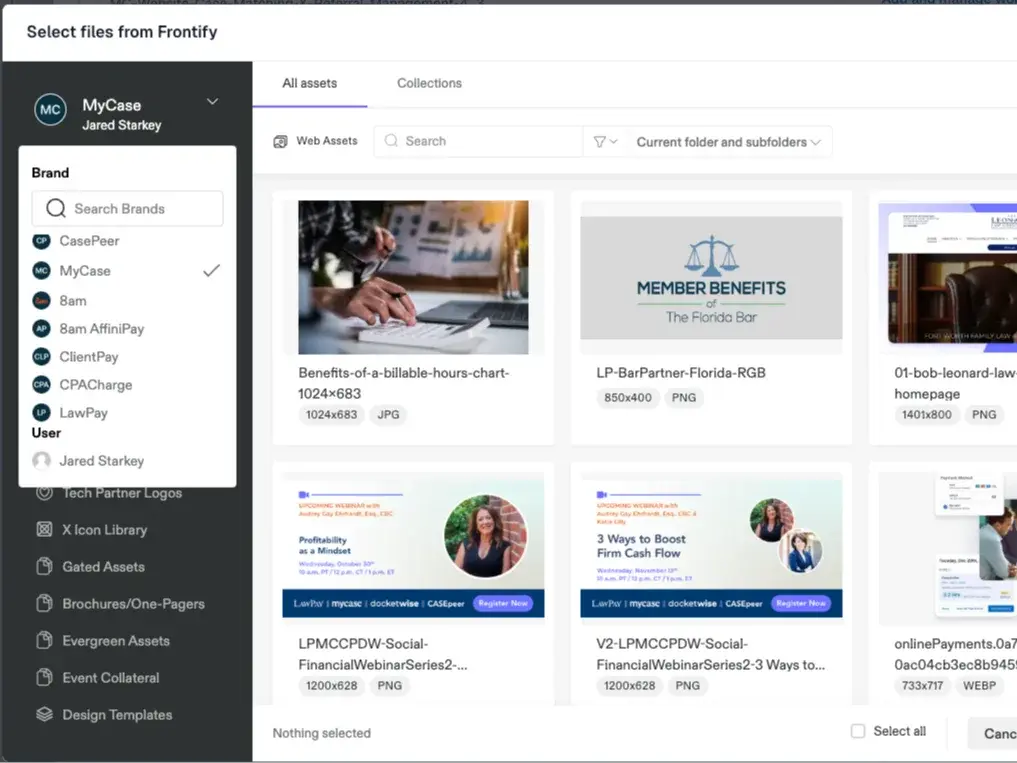
- Consistent branding & governance: Centralized templates + Frontify DAM integration keep every asset on-brand.
- GEO & SEO + growth built-in: Redirects preserved, structured content for AI/SEO visibility, and scalable content modeling.
- Future-ready: Supports personalization, localization, and new product rollouts.
The Challenge
8am faced operational challenges across multiple legacy CMS platforms including WordPress, HubSpot, and custom page builders. Inconsistent publishing workflows, heavy plugin dependencies, and thousands of scattered media assets created bottlenecks that slowed their marketing efforts.
The upcoming rebrand to 8am required unifying operations across all Affinipay brands, but their existing infrastructure couldn’t support this level of coordination and consistency.
The Solution
We partnered with Contentful to deliver a unified content architecture, beginning with a full migration of MyCase.com from WordPress to Contentful.
Key elements of the MyCase solution included a full migration of MyCase.com encompassing 166+ pages, 400+ blog posts, and 4,700+ media files. We built a structured content model for blogs, guides, webinars, press releases, videos, and landing pages. Design system standardization streamlined and standardized design components across the site. We ensured SEO continuity and GEO visibility by preserving 143+ SEO-critical redirects and improving metadata governance. For MarOps enablement, we integrated Marketo forms directly into Contentful’s structured model. Tech enablement connected Frontify DAM to manage brand assets consistently across all brands.
With the help of an Atomic Design System, this solution became the blueprint for ongoing migrations and updates across the broader 8am portfolio.
Shared DAM: One asset library powers all 8am brands — no duplication, no outdated files.
The Results
8am now operates on a centralized, API-first content platform that empowers its marketing and digital teams to scale campaigns faster, maintain consistent brand messaging, and collaborate more efficiently.
Structured workflows and reusable components reduced time-to-publish significantly. Brand, marketing, and digital teams now collaborate inside one system with shared visibility. Centralized asset management through DAM integration ensures consistency across all brands. The scalable foundation positions 8am for personalization, AI readiness, and continued growth.
It’s truly a night and day difference working with this new flow … It’s fantastic.
— Alexander Maxwell, Senior Designer, 8am
Overview
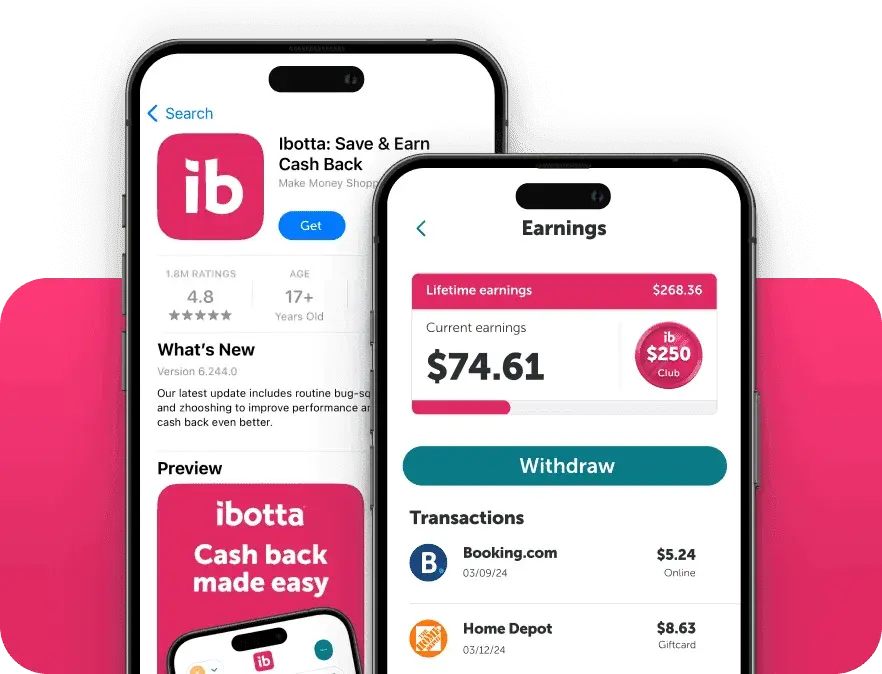
Ibotta is a leading performance marketing platform that helps brands reach over 200 million consumers through results-driven digital promotions. Backed by Walmart, Ibotta’s Performance Network (IPN) empowers marketers to influence purchasing decisions, shopping locations, and shopping frequency.
Millions of consumers use Ibotta to get cash back every time they shop, earning an average of $261 each year.
We partnered with Ibotta through a collaboration focused on Contentful. This partnership brought together Ibotta’s innovative consumer engagement model and our digital strategy expertise. Our shared goal: build smarter, results-driven experiences that move people and move product.

The approach
We served as Ibotta’s hands-on digital partner, providing architecture and Contentful guidance through their replatform.
We worked alongside their team to ensure smooth implementation, troubleshoot platform challenges, and support scalable workflows. The goal was helping them get more out of their tools and move faster with confidence.
The Results
Together, we crafted digital experiences that increase brand visibility and drive real-world sales.
By combining Ibotta’s performance-driven platform with our technical expertise, we delivered added value — not just to the Ibotta team, but to the brands they serve. This translated into measurable impact where it matters most.
Why this project matters
We’re proud to support partners like Ibotta who are reshaping the future of performance marketing.
This collaboration reflects what we do best: delivering flexible, expert support that helps teams move faster, scale smarter, and stay focused on what drives results. We look forward to continuing to build alongside innovative brands making an impact.
With Ibotta, you can get cash back every time you shop, on the app or in-store. Join the millions of Savers who earn $261 each year on average.

The Results
Together, we crafted digital experiences that increase brand visibility and drive real-world sales. By combining Ibotta’s performance-driven platform with our technical expertise, we delivered added value to the Ibotta team and the brands they serve. This translated into measurable impact where it matters most.
Wow! We are so thankful and impressed with your ability to flex fast and support this project.
— Keith Nickoles, Ibotta
Key Outcomes
The new content system fundamentally changed how Workhuman operates digitally and enabled tracking of critical performance indicators:
Content reuse efficiency: Content is created once and deployed across channels. The system tracks reuse patterns and identifies optimization opportunities, enabling measurement of how efficiently content scales.
Time-to-publish: Streamlined workflows and automated propagation reduce publishing cycles. Updates deploy across channels instantly, creating measurable improvements in speed-to-market.
Brand consistency: The system enforces design standards, voice, and structure automatically. Consistency becomes measurable rather than subjective, with deviations flagged before publication.
Cross-channel engagement visibility: Consolidated, structured content creates the foundation for unified analytics. Workhuman can now measure what performs, where, and why—then optimize accordingly.
Operational efficiency: Eliminated duplicate content management across previously siloed systems, reduced redundant workflows, and created measurable improvements across editorial operations.
Beyond the metrics, the system established foundational capabilities:
Single source of truth: Editorial and development teams work from unified content infrastructure, eliminating version control issues and conflicting updates.
Foundation for continuous improvement: Clear analytics, structured content models, and flexible architecture enable ongoing optimization based on performance data.
Strategic agility: Content decoupled from presentation means new channels and formats don’t require content rewrites, dramatically reducing time-to-market for new initiatives.
The Challenge
Workhuman’s content infrastructure had become operationally unsustainable and strategically misaligned:
Fragmented publishing workflows: Content lived across WordPress (1,500 news and blog posts, 3,500 files) and Uberflip (3,500 posts and resources)—8,500+ pieces total with no single source of truth, forcing redundant work across editorial teams.
No performance visibility: Siloed systems meant siloed analytics. Understanding what content drove engagement, what could be optimized, or what deserved investment required manual aggregation and guesswork.
Inconsistent brand experiences: Different platforms meant different capabilities. Design standards varied. Brand consistency depended on individual editors remembering guidelines rather than systems enforcing them.
Technical debt accumulation: Years of workarounds, custom code, and platform limitations created brittleness that slowed innovation and prevented strategic content initiatives.
These systemic barriers prevented Workhuman from achieving core digital objectives: measuring content performance, optimizing based on data, and deploying content strategically across channels.
The Approach
Oomph designed and implemented a unified content system built on Contentful’s headless architecture—treating content as structured data that could be published anywhere while enabling comprehensive measurement:
Content structure and governance: Developed structured content models that replaced freeform HTML with controlled fields and vocabularies. This created consistency guardrails that empowered editors while enabling measurement of reuse patterns and brand compliance.
Strategic migration at scale: Consolidated 8,500+ pieces across WordPress and Uberflip systems. Worked with Workhuman to evaluate, prioritize, and migrate only valuable content—eliminating outdated resources, consolidating duplicates, and archiving low-performing pieces to improve quality while creating a cleaner baseline for measurement.
Capability preservation with systemic improvement: Rather than removing features editors relied on, reimagined how needs could be met through structured models. Editors maintained flexibility while the system enforced brand standards automatically and tracked compliance.
Operational system delivery: Delivered complete functioning infrastructure including content models, migration tooling, editorial workflows, governance documentation, and team training. Workhuman could operate, publish, and measure from day one.
The Result
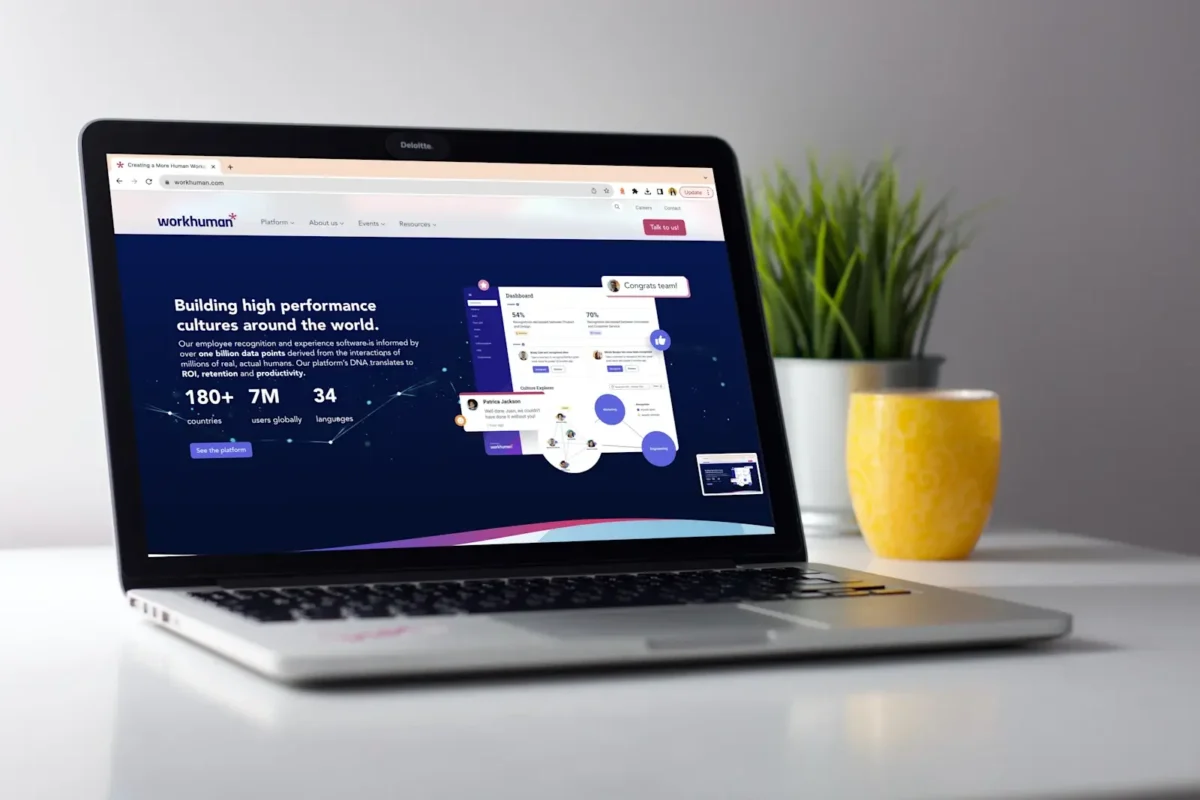
Workhuman launched a headless content system that unified previously fragmented operations. Their editorial and development teams now work from a single source of truth, publishing consistent brand experiences across digital channels while tracking the performance indicators that drive continuous improvement.
The system doesn’t just manage content—it enables the operational clarity and measurement infrastructure Workhuman needs to optimize performance over time.
Why This Matters
Content systems are performance systems. When content operations are fragmented, organizations can’t measure what matters or optimize with confidence. They’re managing logistics instead of improving outcomes.
By treating content infrastructure as an integrated system, Oomph helped Workhuman build the foundation for continuous improvement—creating operational capacity to measure, learn, and systematically optimize how content drives business value.
This transformation enables what matters most: moving from content management to content performance optimization.
We are all super pumped with the progress. You and the team are doing an amazing job and we are very excited to unveil this!
— Jon Bizeur, Senior Director of Web & Digital Experience, Workhuman
THE BRIEF
Never Stopping, Always Evolving
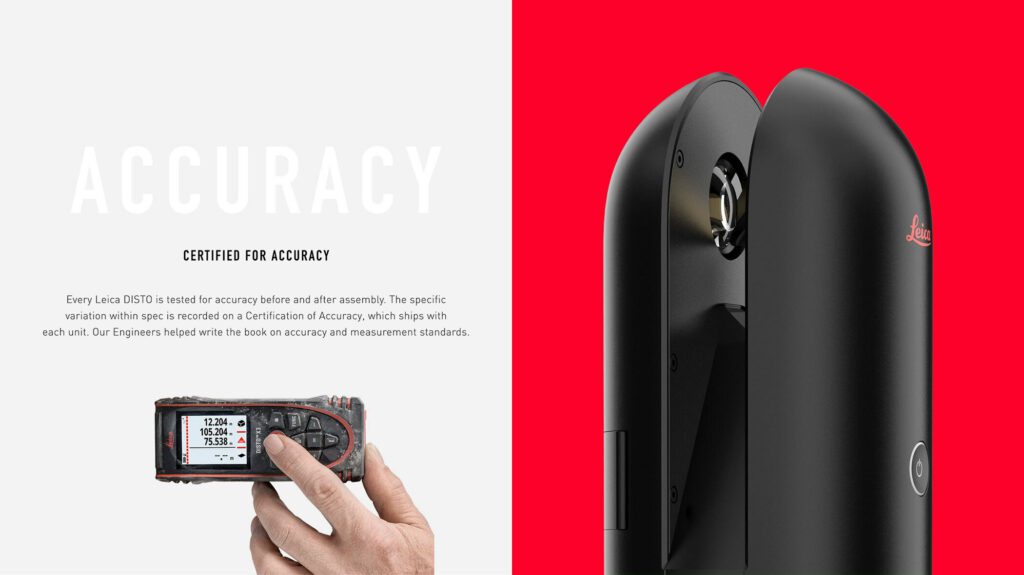
Leica Geosystems was founded on cutting-edge technology and continues to push the envelope with their revolutionary products. Leica Geosystems was founded by Heinrich Wild and made its first rangefinder in 1921. Fast forward to the 21st century, and Leica Geosystems is the leading manufacturer of precision laser technology used for measurements in architecture, construction, historic preservation, and DIY home remodeling projects.
Oomph and Leica collaborated on an initial project in 2014 and have completed multiple projects since. We transitioned the site into a brand new codebase with Drupal 8. With this conversion, Oomph smoothed out the Leica team’s pain points related to a multisite architecture. We created a tightly integrated single site that can still serve multiple countries, languages, and currencies.

THE CHALLENGE
Feeling the Pain-points with Multisite
Leica’s e-commerce store is active in multiple countries and languages. Managing content in a Drupal multisite environment meant managing multiple sites. Product, content, and price changes were difficult. It was Oomph’s challenge to make content and product management easier for the Leica team as well as support the ability to create new country sites on demand. Leica’s new e-commerce site needed to support:
MULTIPLE COUNTRIES AND A GLOBAL OPTION
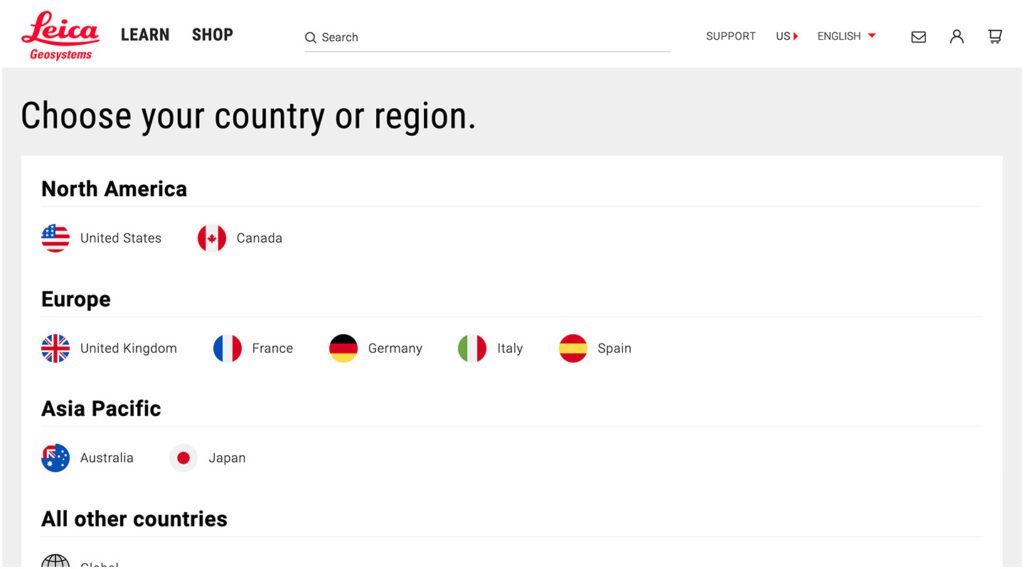
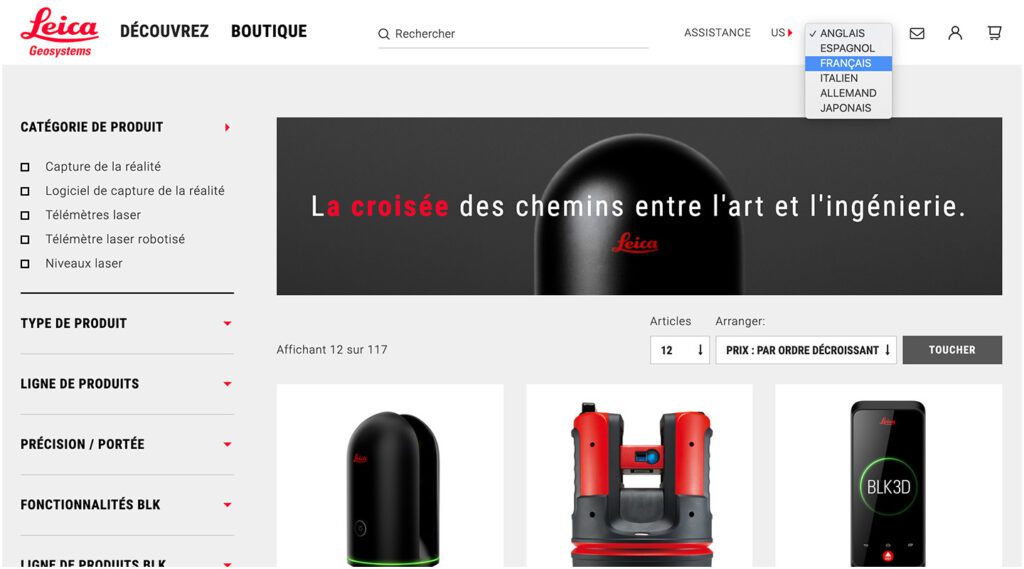
SIX LANGUAGES
MANY 3RD-PARTY INTEGRATIONS
The pain points of the previous Multisite architecture were that each country was a silo:
- No Single Sign On (SSO): Multiple admin log-ins to remember
- Repetitive updates: Running Drupal’s update script on every site and testing was a lengthy process
- Multiple stores: Multiple product lists, product features, and prices
- Multiple sites to translate: each site was sent individually to be translated into one language
THE APPROACH
Creating a Singularity with Drupal 8, Domain Access, & Drupal Commerce
A move to Drupal 8 in combination with some smart choices in module support and customization simplified many aspects of the Leica team’s workflow, including:
- Configuration management: Drupal 8’s introduction of configuration management in core means that point-and-click admin configuration can get exported from one environment and imported into another, syncing multiple environments and saving configuration in our code repository
- One Database to Rule Them All: Admins have a single site to log into and do their work, and developers have one site to update, patch, and configure
- One Commerce Install, Multiple stores: There is one Drupal Commerce 2.x install with multiple stores with one set of products. Each product has the ability to be assigned to multiple stores, and price lists per country control product pricing
- One Page in Multiple Countries and Multiple Languages: The new single site model gives a piece of content one place to live, while authors can control which countries the content is available and the same content is translated into all the languages available once.
- Future proof: With a smooth upgrade path into Drupal 9 in 2020, the Drupal 8 site gives Leica more longevity in the Drupal ecosystem
LEARN VS. SHOP
Supporting Visitor Intention with Two Different Modes
While the technical challenges were being worked out, the user experience and design had to reflect a cutting-edge company. With the launch of their revolutionary product, the BLK 360, in 2018, Leica positioned itself as the Apple of the geospatial measurement community — sleek, cool, cutting-edge and easy to use. While many companies want to look as good as Apple, few of them actually have the content and product to back it up.
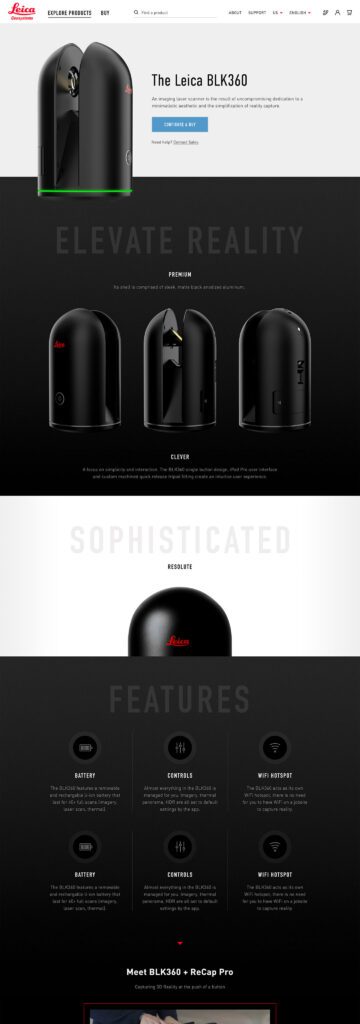
The navigation for the site went through many rounds of feedback and testing before deciding on something radically simple — Learn or Shop. A customer on the website is either in an exploratory state of mind — browsing, comparing, reviewing pricing and specifications — or they are ready to buy. We made it very clear which part of the website was for which.
This allowed us to talk directly to the customer in two very different ways. On the Learn side, the pages educate and convince. They give the customer information about the product, reviews, articles, sample data files, and the like. The content is big, sleek, and leverages video and other embedded content, like VR, to educate.
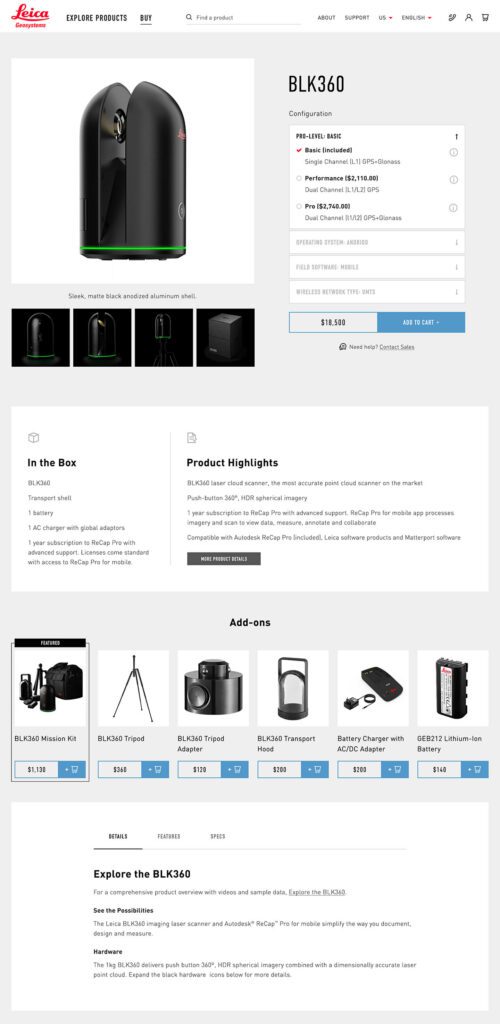
On the Shop side the pages are unapologetically transactional. Give the visitor the right information to support a purchase, clearly deliver specs and options like software and warranties, without any marketing. We could assume the customer was here to purchase, not to be convinced, so the page content could concentrate on order completion. The entire checkout process was simplified as much as possible to reduce friction. Buying habits and patterns of their user base over the past few site iterations were studied to inform our choices about where to simplify and where to offer options.
THE RESULTS
More Nimble Together
The willingness of the Drupal community to support the needs of this project cannot be overlooked, either. Oomph has been able to leverage our team’s commitment to open source contributions to get other developers to add features to the modules they support. Without the give and take of the community and our commitment to give back, many modifications and customizations for this project would have been much more difficult. The team at Centarro, maintainers of the Commerce module, were fantastic to work with and we thank them.
We look forward to continuing to support Leica Geosystems and their product line worldwide. With a smooth upgrade path to Drupal 9 in 2020, the site is ready for the next big upgrade.
Generative Engine Optimization (GEO) is making organizations scramble — our clients have been asking “Are we ready for the new ways LLMs crawl, index, and return content to users? Does our site support evolving GEO best practices? What can we do to boost results and citations?”
Large language models (LLMs) and the services that power AI summaries don’t “think” like humans but they do perform similar actions. They seek content, split it into memorable chunks, and rank the chunks for trust and accuracy. If pages use semantic HTML, include facts and cite sources, and include structured metadata, AI crawlers and retrieval systems will find, store, and reproduce content accurately. That improves your chance of being cited correctly in AI overviews.
While GEO has disrupted the way people use search engines, the fundamentals of SEO and digital accessibility continue to be strong indicators of content performance in LLM search results. Making content understandable, usable, and memorable for humans also has benefits for LLMs and GEO.
How LLM systems (and AI-driven overviews) get their facts
Understanding how LLMs crawl, process, and retrieve web content helps us understand why semantic structure and accessibility best practices have a positive effect. When an AI system generates an answer that cites the web, several distinct back-end steps usually happen:
- Crawling — Bots visit URLs and download page content. Some crawlers execute javascript like a browser (Googlebot) while others prefer raw HTML and limit their rendering.
- Chunking — Large documents are split into small, logical “chunks” of paragraphs, sections, or other units. These chunks are the pieces that are later retrieved for an answer. How a page’s content is structured with headings, paragraphs, and lists determines the likely chunk boundaries for storage.
- Vectorization — Each chunk is then converted into a numeric vector that captures its semantic meaning. These embeddings live in a vector database and enable systems to find chunks quickly. The quality of the vector depends on the clarity of the chunk’s text.
- Indexing — Systems will store additional metadata (URL, title, headings, metadata) to filter and rank results. Structured data like schema metadata is especially valuable.
- Retrieval — A user asks a question or performs a search and the system retrieves the most semantically similar chunks via a vector search. It re-ranks those chunks using metadata and other signals and then composes its answer while citing sources (sometimes).
The Case for Human-Accessible Content
There are many more reasons why digital accessibility is simply the right thing to do. It turns out that in addition to boosting SEO, accessibility best practices help LLMs crawl, chunk, store, and retrieve content more accurately.
During retrieval, small errors like missing text, ambiguous links, or poor heading order can fail to expose the best chunks. Let’s dive into how this can happen and what common accessibility pitfalls contribute to the confusion.
For Content Teams — Authors, Writers, Editors
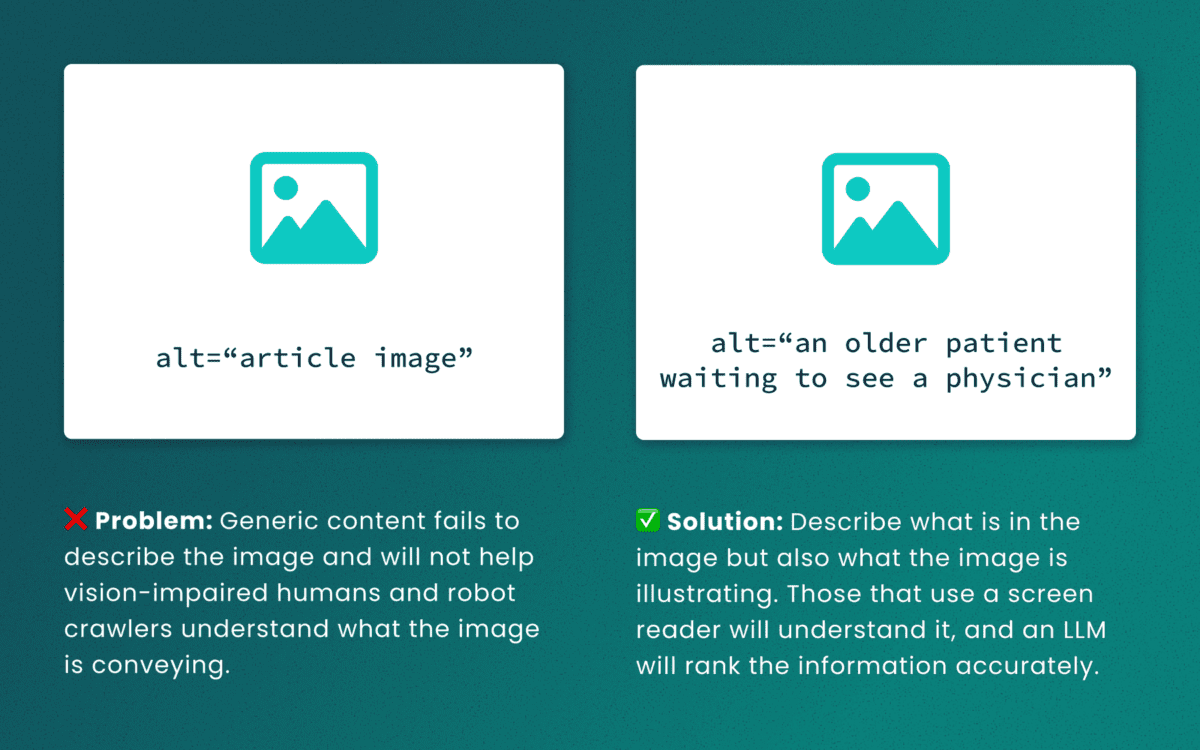
Lack of descriptive “alt” text
While some LLMs can employ machine-vision techniques to “see” images as a human would, descriptive alt text verifies what they are seeing and the context in which the image is relevant. The same best practices for describing images for people will help LLMs accurately understand the content.
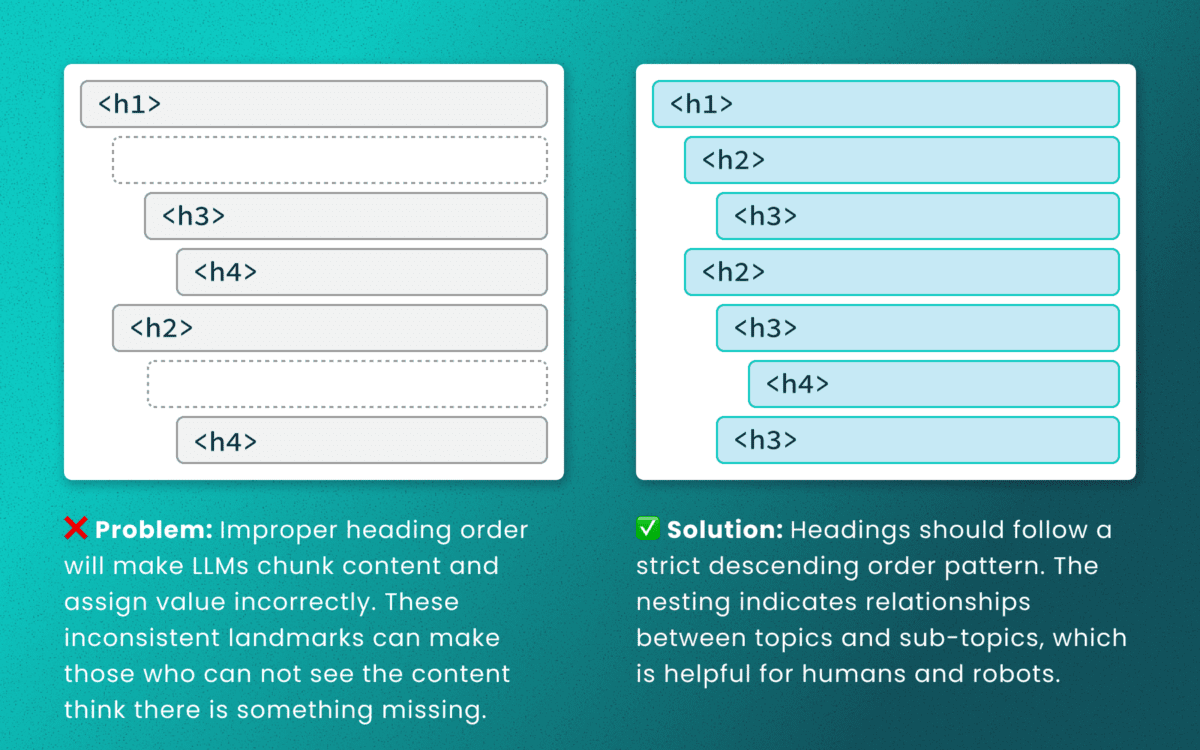
Out-of-order heading structures
Similar to semantic HTML, headings provide a clear outline of a page. Machines (and screen readers!) use heading structure to understand hierarchy and context. When a heading level skips from an <h2> to an <h4>, an LLM may fail to determine the proper relationship between content chunks. During retrieval, the model’s understanding is dictated by the flawed structure, not the content’s intrinsic importance. (Source: research thesis PDF, “Investigating Large Language Models ability to evaluate heading-related accessibility barriers”)
Descriptive and unique links
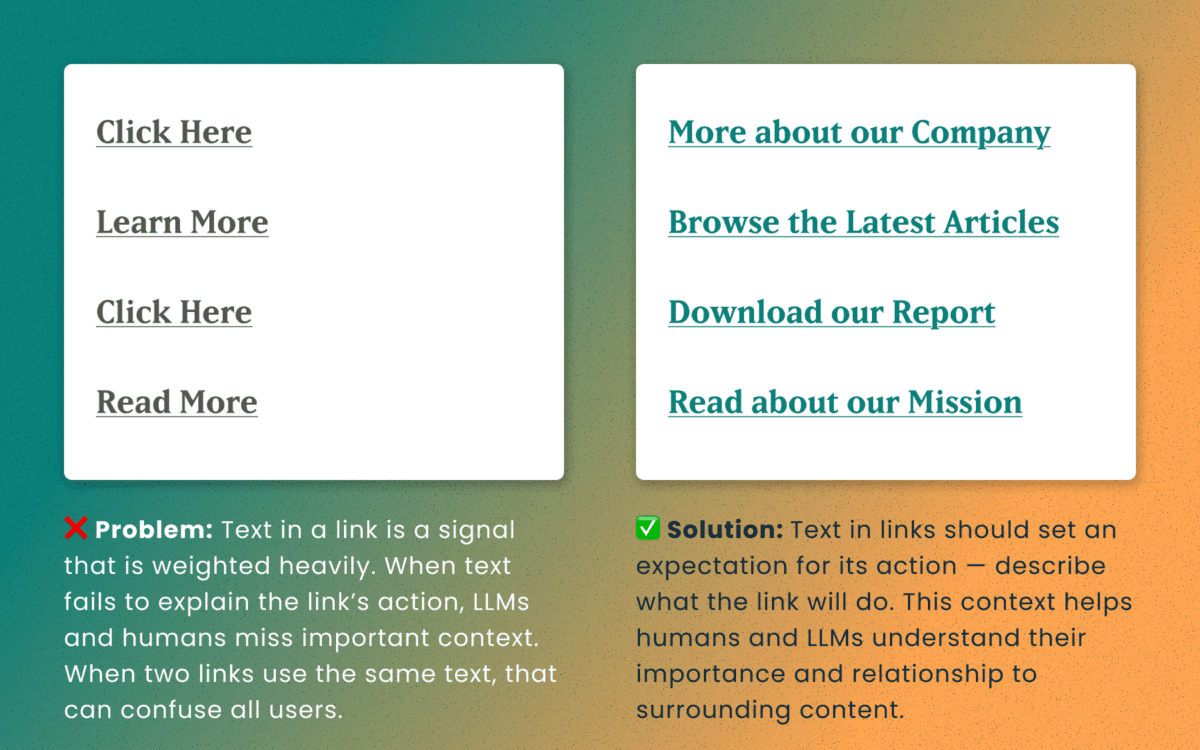
All of the accessibility barriers surrounding poor link practices affect how LLMs evaluate their importance. Link text is a short textual signal that is vectorized to make proper retrieval possible. Vague link text like “Click here” or “Learn More” does not provide valuable signals. In fact, the same “Learn More” text multiple times on a page can dilute the signals for the URLs they point to.
Using the same link text for more than one destination URLs creates a knowledge conflict. Like people, an LLM is subject to “anchoring bias,” which means it is likely to overweight the first link it processes and underweight or ignore the second, since they both have the same text signal.
Example of the duplicate link problem: <a href=“[URL-A]”>Duplicate Link Text</a>, and then later in the same article, <a href=“[URL-B]”>Duplicate Link Text</a>. Conversely, when the same URL is used more than once on a page, the same link text should be repeated exactly.
Logical order and readable content
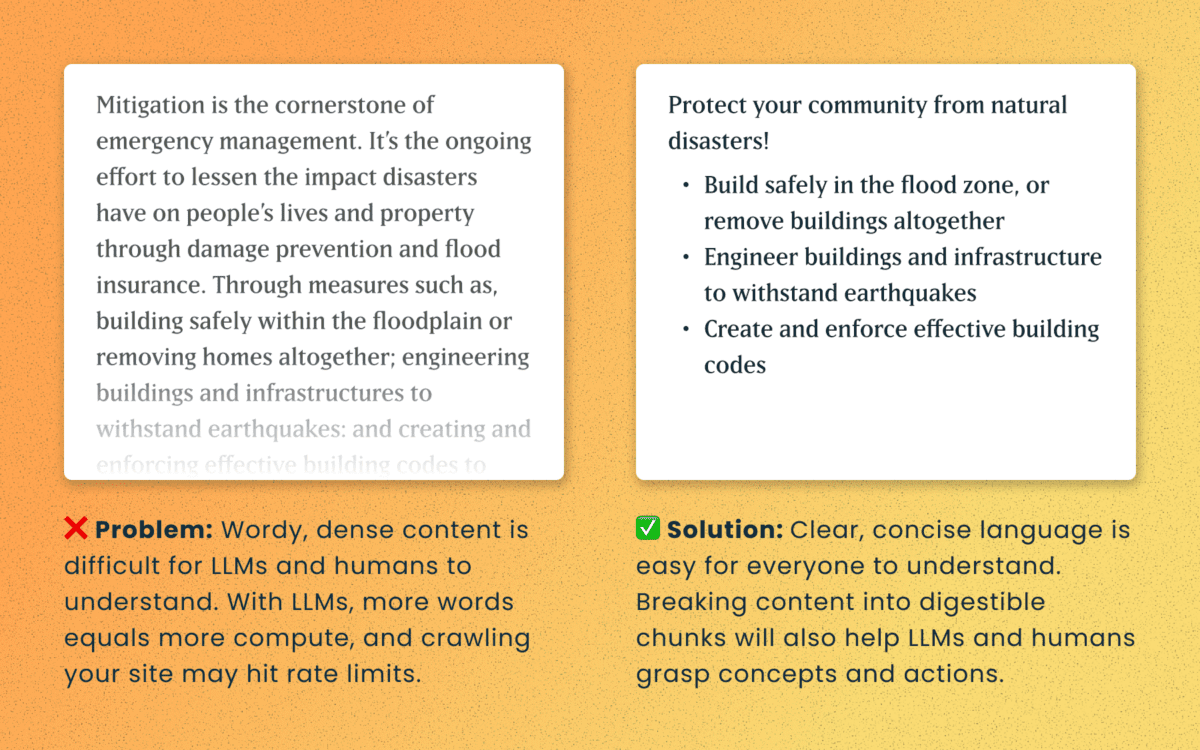
Simple, direct sentences (one fact per sentence) produce cleaner embeddings for LLM retrieval. Human accessibility best practices of plain language and clear structure are the same practices that improve chunking and indexing for LLMs
For Technical Teams — IT, Developers, Engineers
Poorly structured semantic HTML
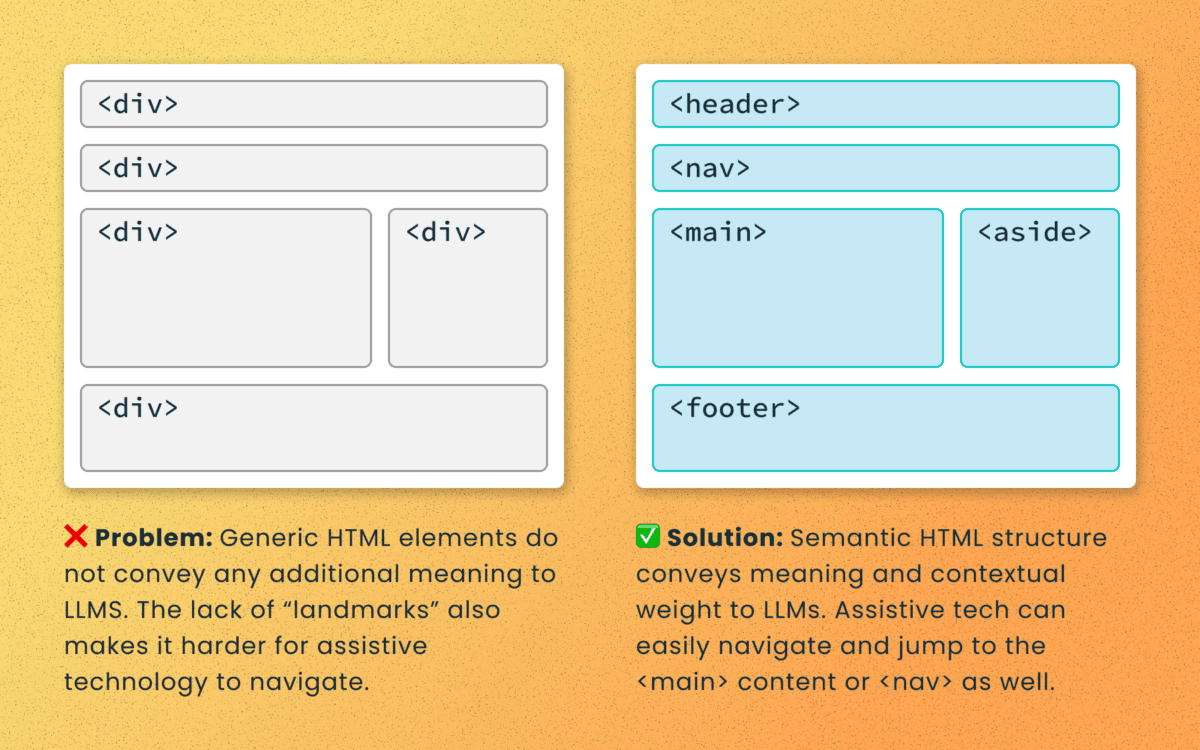
Semantic elements (<article>, <nav>, <main>, <h1>, etc.) add context and suggest relative ranking weight. They make content boundaries explicit, which helps retrieval systems isolate your content from less important elements like ad slots or lists of related articles.
Lack of schema
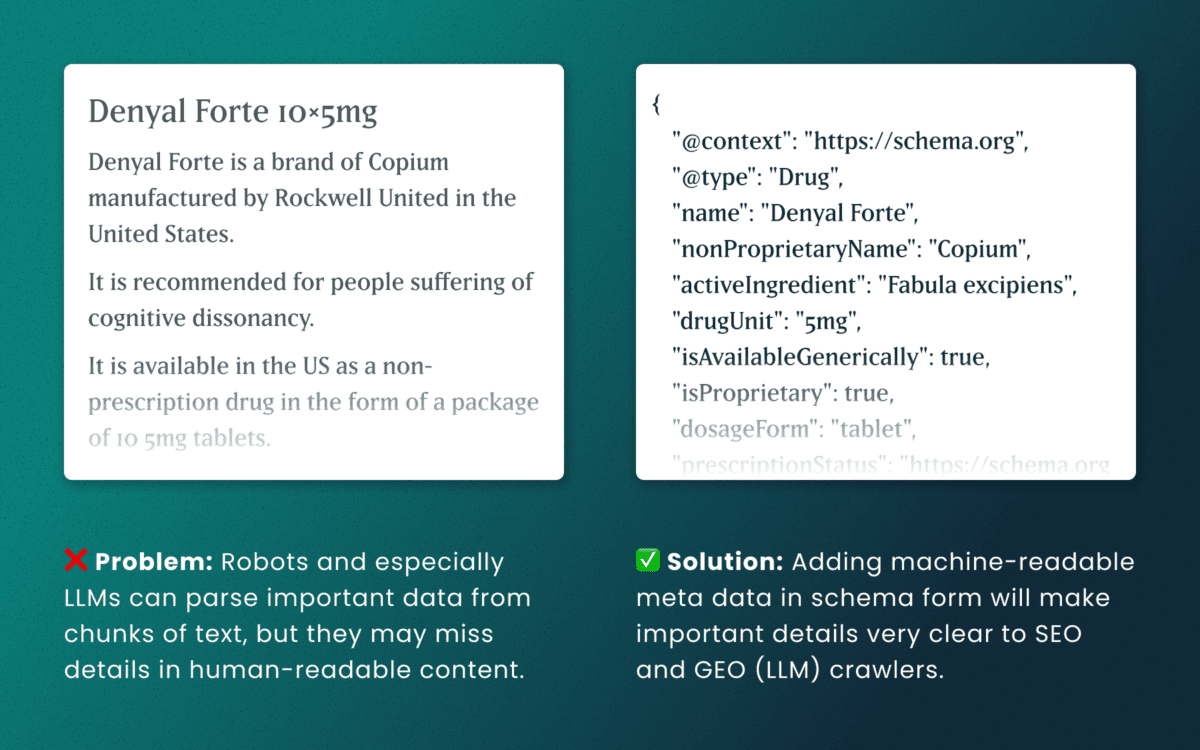
This is technical and under the hood of your human-readable content. Machines love additional context and structured schema data is how facts are declared in code — product names, prices, event dates, authors, etc. Search engines have used schema for rich results and LLMs are no different. Right now, server-rendered schema data will guarantee the widest visibility, as not all crawlers execute client-side Javascript completely.
How to make accessibility even more actionable
The work of digital accessibility is often pushed to the bottom of the priority list. But once again, there are additional ways to frame this work as high value. While this work is beneficial for SEO, our recent research uncovers that it continues to be impactful in the new and evolving world of GEO.
If you need to frame an argument to those that control the investments of time and money, some talking points are:
- Accurate brand representation — Poor accessibility hides facts from LLMs. When customers ask an AI assistant for “best X for Y,” your content may not be shown — or worse, misrepresented. Fixing accessibility reduces brand risk and increases content authority.
- Engagement boost — Improvements that increase accurate citations and AI visibility can increase referral traffic, feature mentions, and lead quality. In a landscape where AI Answers are reducing click-through rates, keeping the traffic you have on your site for longer and building brand trust becomes vital.
- Increased exposure — Digital inclusion makes your content widely accessible to machines and the machines that assist humans. Think about a search engine as another human-assistive device, just like a keyboard or screen reader.
- Multi-pronged benefits — Accessibility improvement improves traditional SEO, can benefit mobile performance, and reduces the risks associated with accessibility compliance policies.
Staying steady in the storm
Let’s be clear — this summer was a “generative AI search freak out.” Content teams have scrambled to get smart about LLM-powered search quickly while search providers rolled out new tools and updates weekly. It’s been a tough ride in a rough sea of constant change.
To counter all that, know that the fundamentals are still strong. If your team has been using accessibility as a measure for content effectiveness and SEO discoverability, don’t stop now. If you haven’t yet started, this is one more reason to apply these principles tomorrow.
If you continue to have questions within this rapidly evolving landscape, talk to us about your questions around SEO, GEO, content strategy, and accessibility conformance. Ask about our training and documentation available for content teams.
Additional Reading
- AHREFs.com: Is SEO Dead? Real Data vs. Internet Hysteria
- SearchEngineJournal.com: How LLMs Interpret Content: How To Structure Information For AI Search
- InclusionHub.com: SEO and Web Accessibility: What You Need to Know (from 2020, but still relevant)
As a digital services firm partnering with destination marketing organizations (DMOs) across the U.S., we’re helping teams navigate what’s already proving to be a volatile 2025—especially on the inbound side. Analysis from the World Travel & Tourism Council (WTTC) projects a stark reality: the U.S. economy will miss out on $12.5 billion in international visitor spending this year, with inbound spend expected to dip to just under $169B, down from $181B in 2024. Even more concerning, the U.S. is the only country among 184 economies in WTTC’s study forecast to see an inbound-spend decline this year.
While external market forces remain largely beyond control, we’ve identified three strategic areas where DMOs can focus their digital platforms to weather this storm and continue demonstrating measurable demand to their partners.
1. Transform Content Into Action-Driving Experiences
Why this strategic shift matters now
With inbound spend shrinking by $12.5B and key feeder markets weakening, undecided travelers need clarity and confidence to choose your destination. Content that reduces uncertainty and highlights immediate value converts better than generic inspiration.
Strategic implementation approach
Activate “Go Now” signals. Combine always-on inspiration with time-sensitive reasons to visit—shoulder-season value, midweek deals, cooling weather breaks—strategically mapped to the soft periods your analytics reveal.
Elevate discovery through intelligent architecture. Curate SEO-optimized content hubs organized by Themes (outdoors, arts, culinary) and Moments (fall colors, winter lights). Implement structured data (FAQ, Event, Attraction) with strategic internal linking architecture so travelers find relevant options fast.
Deploy micro-itineraries for immediate conversion. Design 24–48-hour “micro-itins” featuring embedded maps, transit and parking guidance, and seamless handoffs to bookable partners. Partnering with platforms like MindTrip reduces content team effort while accelerating output—a strategy that’s proven particularly effective for our DMO clients facing resource constraints.
Authority-driven event content optimization. Event pages generate the highest intent traffic. Enhance them with rich media, last-minute planning resources, and strategic “if sold-out, try this” alternatives.
Transparent value communication. Feature free experiences prominently, implement intuitive budget filters, and deploy “Best Time to Visit” calendars comparing crowds and pricing by week and month. Transparency builds trust, and trust drives conversion.
2. Build Your Competitive Moat Through Data-Driven Audience Cultivation
Your first-party data represents your most defensible competitive advantage. As platform targeting becomes increasingly constrained and inbound spending softens, DMOs that build and activate their own audience will capture attention far more efficiently than those relying solely on paid channels.
Strategic audience development
Implement high-intent capture everywhere. Deploy contextual email and SMS prompts across high-intent templates—events, itineraries, trip planners, partner directories. Offer valuable micro-perks like exclusive maps and early event alerts.
Master progressive profiling. Collect visitor preferences—season, interests, party type, origin market—over multiple touchpoints rather than overwhelming users with lengthy initial forms.
Create actionable audience segments. Develop cohorts around 2025’s market realities: last-minute planners, shoulder-season seekers, road-trippers, value hunters, family weekenders, and meetings planners.
Future-proof attribution systems. Combine GA4 with server-side tagging and standardized UTM schemas for every partner handoff. Track outbound clicks, partner session quality, itinerary saves and usage, offer redemptions, and newsletter-driven sessions. This comprehensive approach ensures you maintain visibility into conversion paths as third-party cookies disappear.
Deploy trend-driven editorial strategy. Develop weekly dashboards blending organic query trends, on-site search terms, partner click-through rates, and feeder-market signals. When interest dips in one market, pivot homepage modules and paid social toward value and itinerary content targeting more resilient markets.
3. Transform Partner Relationships Through Measurable Value Delivery
In a softening inbound environment where domestic spending carries approximately 90% of the economic load, your partners need two critical elements: qualified attention and proof of conversion. Your website should function as the region’s premier meta-directory and conversion engine.
Experience optimization strategies
Enable one-click handoffs with context preservation. Pass user filters—dates, neighborhoods, price ranges—directly into partner sites and booking engines while preserving state if travelers return.
Deploy persistent trip planning tools. Allow users to save places and generate shareable itineraries with intelligent handoffs: “Book these two hotels,” “Reserve rentals,” “Get festival passes.”
Create compelling partner storefronts. Develop rich partner profiles featuring availability widgets, authentic reviews, social proof, and clear calls-to-action.
Implement strategic co-op modules. Design paid placements that provide value rather than feeling like advertisements: “Local Favorites” carousels, sponsor highlights, seasonal deal tiles—rotated by audience cohort and season. This generates additional revenue while maintaining user experience quality.
Establish closed-loop reporting systems. Standardize UTM tracking, monitor outbound events, and where permitted, implement partner pixels and offer codes to report assisted conversions by category and campaign. Partners need proof of ROI, and data-driven reporting builds stronger, more profitable relationships.
How Oomph Can Accelerate Your Success
If you’re experiencing softer international interest, shorter booking windows, or declining partner satisfaction, you’re facing the same challenges as DMOs nationwide. The organizations pulling ahead aren’t waiting for market recovery—they’re strengthening their digital platforms through strategic content optimization, systematic audience cultivation, and demonstrable partner value creation.
Our proven methodology transforms these challenges into competitive advantages.
We’ll conduct a comprehensive audit of your digital platform against these three strategic pillars, quantify immediate optimization opportunities, and provide your partners with what they need most: qualified, measurable demand. The market headwinds are real, but the right strategic approach can help you maintain resilience and emerge stronger when conditions improve. Let’s navigate these challenges together.
When you’re responsible for your organization’s digital presence, it’s natural to focus on what’s visible: the design, the content, the user experience. But beneath every modern website lies a complex ecosystem of technologies, integrations, and workflows that can either accelerate your team’s success or create hidden friction that slows everything down.
That’s where a technical audit becomes invaluable. It’s not just a diagnostic tool—it’s a strategic opportunity to understand the foundation of your platform and make informed decisions about your digital future.
It’s Like a Home Inspection for Your Website
Think about buying a house. You walk through focusing on the big picture—does the kitchen work for your family? Is there enough space? But a good home inspector looks deeper, checking the foundation, examining the electrical system, and spotting that small leak under the bathroom sink that could become a major problem later.
A technical audit takes the same comprehensive approach to your digital platform. We examine not just what’s working today, but what might impact your team’s ability to execute tomorrow. The goal isn’t to find problems for the sake of finding them—it’s to give you the complete picture you need to plan strategically.
Creating Shared Understanding Across Your Entire Team
One of the most powerful outcomes of a technical audit is alignment. Whether you’re managing internal developers, partnering with an agency, or preparing to issue an RFP, having a clear baseline allows everyone to ask better questions and make more accurate decisions.
A strategic technical audit delivers:
Proactive Problem-Solving: Surface technical issues before they become roadblocks to important campaigns or launches.
Performance Optimization: Identify specific improvements that will measurably enhance user experience and conversion rates.
Workflow Enhancement: Reveal friction points that slow down content updates, campaign launches, or day-to-day management tasks.
Vendor Enablement: Provide partners and potential vendors with the context they need to scope work accurately and ask intelligent questions.
Strategic Planning: Create a foundation for long-term digital strategy decisions, from infrastructure investments to editorial tooling.
The organizations we work with often tell us that a technical audit helped them transition from reactive maintenance to proactive digital platform management—a shift that pays dividends across every initiative.
What We Typically Discover
While every platform is unique, certain patterns emerge across industries and organization types. Technical audits frequently reveal:
Security and Maintenance Opportunities: Outdated software, plugins requiring updates, or access configurations that can be strengthened with minimal effort. This often includes ensuring accessibility compliance meets current standards.
Performance Enhancements: Specific optimizations in areas like image compression, caching strategies, or database queries that directly impact user experience. Modern audits also examine search visibility and performance optimization.
Scalability Considerations: Code or architectural decisions that work fine today but could limit growth or flexibility as your needs evolve. This includes evaluating search infrastructure and international expansion capabilities.
Process Improvements: Gaps in version control, deployment workflows, or change management that create unnecessary risk or slow down development cycles.
Editorial Workflow Optimization: Content management processes that feel cumbersome or inconsistent, often because they evolved organically rather than being designed strategically. For global organizations, this includes reviewing translation and localization systems.
Many of these findings aren’t urgent fixes—they’re strategic insights that become incredibly valuable when you’re planning a redesign, launching a major campaign, or evaluating new partnerships.
When a Technical Audit Delivers Maximum Value
You don’t need to wait for problems to emerge. Technical audits are particularly valuable when:
Taking Over Digital Responsibility: You’ve inherited a platform and need a comprehensive understanding of what you’re working with and where the opportunities lie.
Planning Major Initiatives: Before investing in a redesign, platform migration, or significant feature development, understanding your current foundation prevents costly surprises.
Preparing for Vendor Selection: Whether you’re issuing an RFP or evaluating agencies, giving potential partners accurate technical context leads to better proposals and more realistic timelines.
Developing Digital Strategy: When you’re ready to create a roadmap for digital growth, grounding decisions in technical reality rather than assumptions leads to better outcomes. This is especially important when considering AI integration or generative engine optimization strategies.
Our Approach to Technical Audits
We design our audits to build clarity and confidence, not overwhelm you with technical jargon. Rather than simply delivering a report, we walk through findings with your team, prioritize recommendations based on your specific goals, and translate technical insights into actionable business language you can share with stakeholders.
Our methodology goes beyond code analysis. We examine how your platform supports your current workflows, aligns with your organizational objectives, and positions you for future growth. This combination of technical depth and strategic perspective ensures you get insights that drive real business outcomes.
The audit process focuses on partnership, not judgment.
We’re not looking for flaws to criticize—we’re identifying opportunities to help you and your partners make smarter decisions. The result is visibility into the hidden layers of your digital platform and a foundation for more strategic planning, better technology investments, and sustainable long-term success.
Ready to understand what’s really happening under the hood of your digital platform? Let’s talk about how a technical audit could support your goals and strengthen your team’s ability to execute on your digital vision.
If your Drupal site relies on Acquia Search leveraging Solr, you’re likely facing a migration from Acquia Search to SearchStax. We’ve guided numerous organizations through this transition and want to share our proven approach to help you navigate this change successfully.
Before diving into the migration process, this transition presents an excellent opportunity to reassess your search strategy entirely. While Solr remains a powerful and robust solution, the search landscape has evolved significantly with innovative alternatives now available. For organizations considering broader platform transitions, this moment offers strategic value beyond search improvements. Modern React-based solutions can deliver dramatically faster user experiences. Our recent work with ONS demonstrates this potential—by replacing their Solr solution with Algolia Instant Search, we helped them achieve a 40% improvement in search response times while creating a more intuitive experience for their members.
Why the Move to SearchStax?
Acquia announced earlier this year that they’re sunsetting their Acquia Search offering in 2026, positioning SearchStax as the recommended migration path through their new partnership. This transition offers enhanced search capabilities and more direct control over your search environment through SearchStax’s comprehensive dashboard, providing visibility into Solr server performance, data analysis tools, search preview functionality, and advanced configuration options.
The architectural similarity ensures a seamless end-user experience—Solr remains the foundation, requiring no front-end changes for this migration path while delivering improved administrative control.
Our Proven Migration Framework
Through multiple successful migrations, we’ve developed a structured approach that minimizes risk and ensures smooth transitions. Here’s our step-by-step framework:
Phase 1: Foundation Setup
- Secure access to the SearchStax dashboard for complete environment management
- Install the SearchStax modules, including the critical “Solr to SearchStax Site Search Migration” module
- Configure and commit your basic settings to establish the foundation
Phase 2: Testing and Validation
- Deploy changes to DEV or STAGE environments for comprehensive testing
- Validate search functionality, performance, and user experience
- Identify and resolve any configuration issues before production deployment
Phase 3: Production Implementation
- Push validated changes to production environment
- Execute core migration steps including server migration (Drupal’s SearchStax authentication automatically generates endpoint and token configurations), index migration to transfer existing search indexes, and view switching to activate SearchStax indexes across your site
Phase 4: Configuration Management
- Implement configuration overrides and ignores to ensure environment-specific settings
- Secure sensitive data while maintaining dedicated SearchStax server settings per environment
- Export SearchStax indexes and updated views from production to feature branch
- Commit and deploy changes in your next release cycle
Phase 5: Transition Management
- Maintain Acquia search indexes temporarily for rollback capability
- Monitor performance and user experience during initial transition period
- Complete final cleanup by disabling Acquia search module and migration tools once stability is confirmed
Addressing Technical Challenges
Our experience across multiple migrations has revealed common technical hurdles that require proactive attention. Configuration issues with Boost by Date Processor settings, Highlighted Fields errors during index rebuilding, and Facet configuration mismatches between environments are frequent challenges. The key to success lies in early identification during lower environment testing and leveraging Acquia support resources to resolve issues before they impact production.
Each migration presents unique challenges based on your specific configuration and content structure. Our approach prioritizes thorough testing and validation to surface these issues early, ensuring smooth production deployment.
Strategic Search Optimization
Successful migration extends beyond technical implementation. Understanding your content architecture, user behavior patterns, and business objectives enables you to optimize search effectiveness during the transition. This migration provides an ideal opportunity to evaluate search performance metrics, refine content indexing strategies, and enhance user experience design.
By following this proven framework and preparing for potential challenges, your organization can successfully transition to SearchStax while improving both administrative capabilities and user search experience. The result is a more robust, manageable search solution that positions your site for future growth and enhanced user engagement.
Our comprehensive migration expertise extends beyond search implementations to complete platform transformations, ensuring your digital infrastructure supports your long-term strategic objectives.
Ready to begin your SearchStax migration? Don’t wait until the 2026 deadline creates a migration rush. Our fixed-price SearchStax migration service ($2,500) provides the structured, proven approach outlined in this guide—from foundation setup through transition management. Get started with your SearchStax migration today.
Drupal has long been known for its flexibility, robustness, and scalability. But for many marketers and content creators, that flexibility can come with a steep learning curve — especially when it comes to building layouts and managing design without the help of a developer. That’s about to change in a big way.
Enter Drupal Canvas (previously called Experience Builder), a new initiative in Drupal that promises to radically streamline and simplify how we build and design pages. While still in its early stages, Experience Builder is ready for testing and experimentation — and it’s something marketers should absolutely have on their radar.
What is Drupal Canvas?
Drupal Canvas is the evolution of Drupal’s current method of flexible page building called Layout Builder. It takes what we know from layout builder and expands it into a unified, user-friendly tool that allows non-developers to build and theme websites directly in the browser. It’s a huge leap toward making Drupal more accessible for site builders, marketers, and content creators alike.
Unlike other page builders, Canvas doesn’t just provide drag-and-drop layout tools. It leverages Drupal’s core strengths — structured data, fine-grained access controls, and reusable components — to ensure consistency across channels and scalability across enterprise-level websites. This makes it uniquely powerful for large organizations managing multiple digital properties.
Dries Buytaert, Drupal’s founder, described it as a response to the fragmented landscape of site-building options in Drupal today. The vision is to consolidate functionality from tools like Paragraphs and Layout Builder into a single, cohesive solution. One that’s intuitive, efficient, and packed with modern capabilities.
Here is a fantastic video demo from DrupalCon Atlanta that was shown by Dries during the keynote address:
Why Now?
The timing couldn’t be better. While Layout Builder was a step in the right direction when it launched in 2018, its limitations became clear as more site builders demanded easier workflows, styling tools, and richer content composition features.
At recent Drupal conventions, the community has rallied around the idea of enhancing user experience across the board. As part of the broader Drupal CMS, Canvas is a key component in bringing Drupal’s usability in line with the expectations of modern content teams.
Why I’m Excited About It
As an engineer who has worked closely with Drupal for years, what excites me most is how Canvas can bridge the many gaps in Drupal’s current page-building ecosystem. Today, there are so many ways to structure content — Blocks, Paragraphs, Layout Builder, Panels — that choosing the right one can be overwhelming.
Drupal Canvas is shaping up to be that “one-stop-shop” we’ve needed. It reduces decision fatigue and gives teams a faster way to get projects off the ground without needing to architect every page structure from scratch.
Even better, it supports creating single-page overrides, component-level editing, and even React-based components right in the editor. That’s something I’ve personally looked forward to for a long time. The ability to build and save reusable components that can be dropped into any page makes this a tool that truly enhances productivity — not just for developers, but for marketers and content creators, too.
My First Look
I had the chance to see Drupal Canvas in action at DrupalCon Atlanta this year. The live demos were impressive and really opened my eyes to what this tool could do, both for newcomers to Drupal and seasoned site builders. Along with Drupal CMS, and recipes, Canvas is easily one of the hottest topics in the Drupal ecosystem right now.
The energy in the room during the sessions was palpable — people are genuinely excited about this. It’s not just another experimental module; it’s a shift in how we think about building on Drupal.
A Game-Changer for Marketers
One of the biggest barriers for marketing teams has always been reliance on developers to make even small layout edits. That’s starting to change.
With Canvas, non-developers will be able to build out dynamic, visually engaging pages — without needing to dive into code. That’s a massive win, especially for small teams in government, education, or nonprofit sectors, where resources are limited and time is of the essence.
Being able to make changes quickly, reuse content intelligently, and maintain a consistent brand without touching a template file is something many organizations have wanted for years. Drupal Canvas delivers on that promise.
Want to Try It Yourself?
If you’re curious to see what the buzz is about, you have two great options to get started:
- Try it yourself: Head to Drupal.org and download the latest version of Drupal CMS. It now comes with an optimized installer that makes getting started faster than ever. Once you’re up and running, you can add the Drupal Canvas module and start exploring.
- See it in action: Not ready to dive in alone? Schedule an implementation consultation with our team for a live demo and personalized guidance on how Drupal CMS can work for your organization.
Looking Ahead
It’s important to note that this is just the alpha version of the Canvas initiative. The team behind it is committed to rapid iteration and community feedback, which means what we’re seeing today is just the beginning.
If this is the foundation, I can only imagine how powerful the tool will become in the next year or two. The Drupal community is known for its collaborative spirit and constant innovation — and Canvas is shaping up to be one of the most important steps forward in years.
So if you’re a marketer, content strategist, or anyone who’s ever been frustrated by the limits of page building in Drupal — now’s the time to dive in. Drupal Canvas is here, and it’s ready to change the game. Ready to explore Drupal Canvas for your organization? Contact us for a complimentary consultation.